
Holiday Park or Homeless Shelter? Who Left Park Operators Holding Australia’sHousing Crisis?
Article by Warren Parrot – @whatsupwithwaz
Australia’s housing crisis has quietly arrived at the front gates of the nation’s holiday and
caravan parks—and many operators are being forced to deal with situations they never
imagined would become part of running a tourism business.
Families priced out of rentals, older Australians with nowhere affordable to live, regional
workers, people escaping domestic violence and those experiencing homelessness are
increasingly approaching parks for extended accommodation. For operators, saying “no
vacancy” is no longer simply a commercial decision. It can mean turning away a mother with
children, a pensioner sleeping in a car or someone facing a genuine personal crisis.
Yet holiday parks are businesses—not government housing departments, crisis centres or
mental-health services.
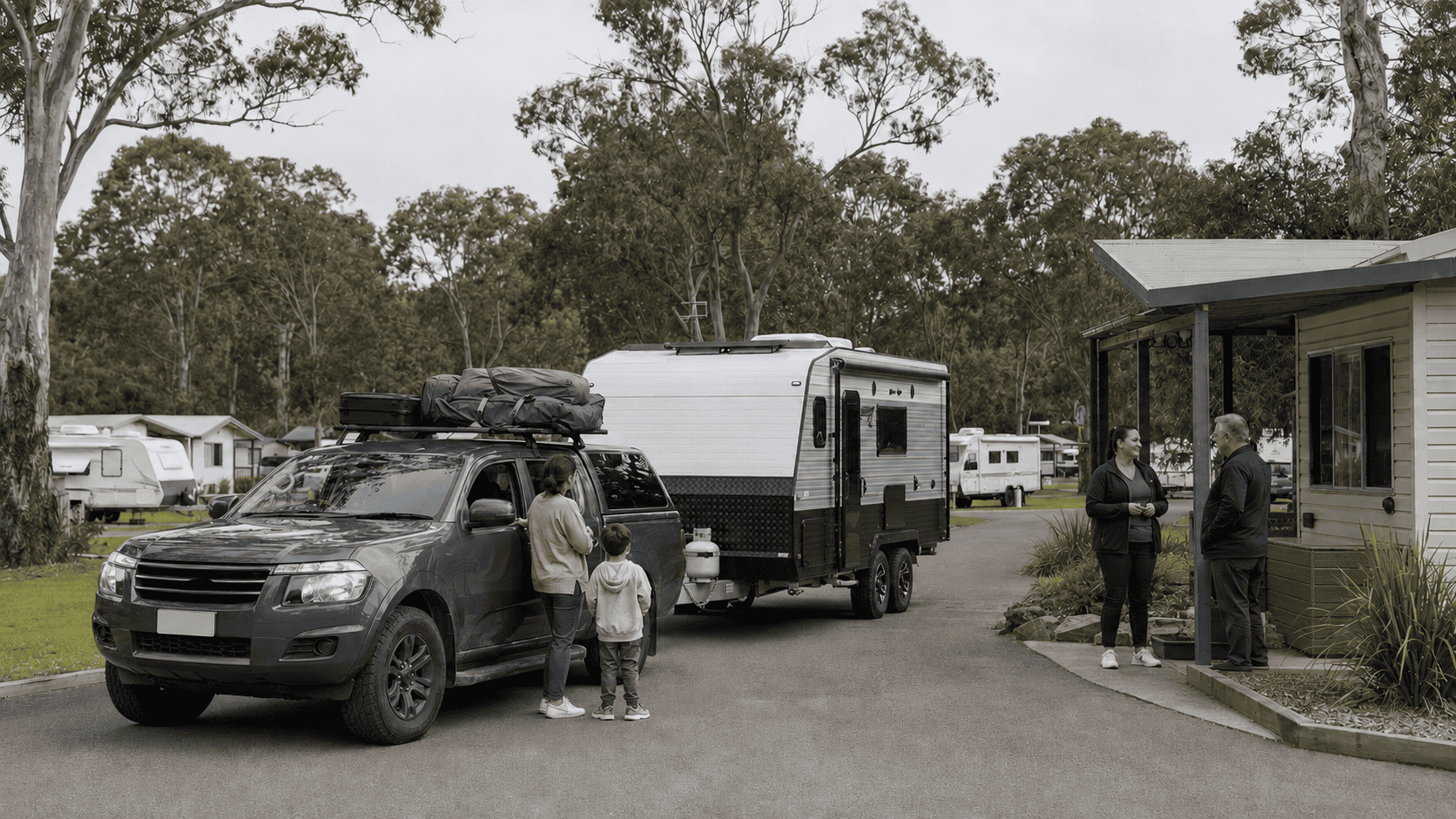
The Pressure Is Being Felt Across Australia
The problem is particularly visible in regional Western Australia, including Bunbury and the
South West, where operators have reported being overwhelmed by requests for permanent
accommodation. Some say their role has shifted from tourism operator to residential
landlord, bringing greater exposure to unpaid fees, disputes, antisocial behaviour and
complex personal circumstances. ABC News
Regional Queensland and parts of South East Queensland have experienced similar
pressure. Tough rental markets and rising property prices have driven more people towards
full-time caravan living, with some former tourist parks transitioning towards permanent
residential use. ABC News
Pressure is also evident in coastal and regional communities across NSW and Victoria, while
Tasmania is reviewing its laws because long-term caravan park residency currently crosses
a complicated mixture of tenancy, planning, building, public-health and consumer legislation.
Tasmanian Consumer, Building and Occupational Services
There Is No Easy Villain
Most people seeking long-term accommodation are not troublemakers. They are ordinary
Australians caught in extraordinary circumstances. Many work, pay their fees and become
valued members of the park community.
However, accepting long-term residents can change a park’s legal obligations, insurance
exposure, operating costs and guest environment. It can also reduce the number of sites
available during peak tourism periods.
Problems arise when a temporary booking gradually becomes someone’s principal
residence. In Victoria, for example, a person may become a caravan park resident after
living there continuously for at least 60 days, provided the stay is residential rather than
recreational. Different definitions and timeframes apply elsewhere, so an operator should
never assume that extending a booking remains a simple holiday arrangement. Consumer
Affairs Victoria
Once residency rights apply, operators may need prescribed agreements, bond procedures,
formal notices and legally recognised reasons to end an arrangement. Simply changing the
locks, disconnecting power or ordering someone to leave could expose the park to tribunal
proceedings, compensation or penalties.
What Parks Should Do Before a Crisis Arrives
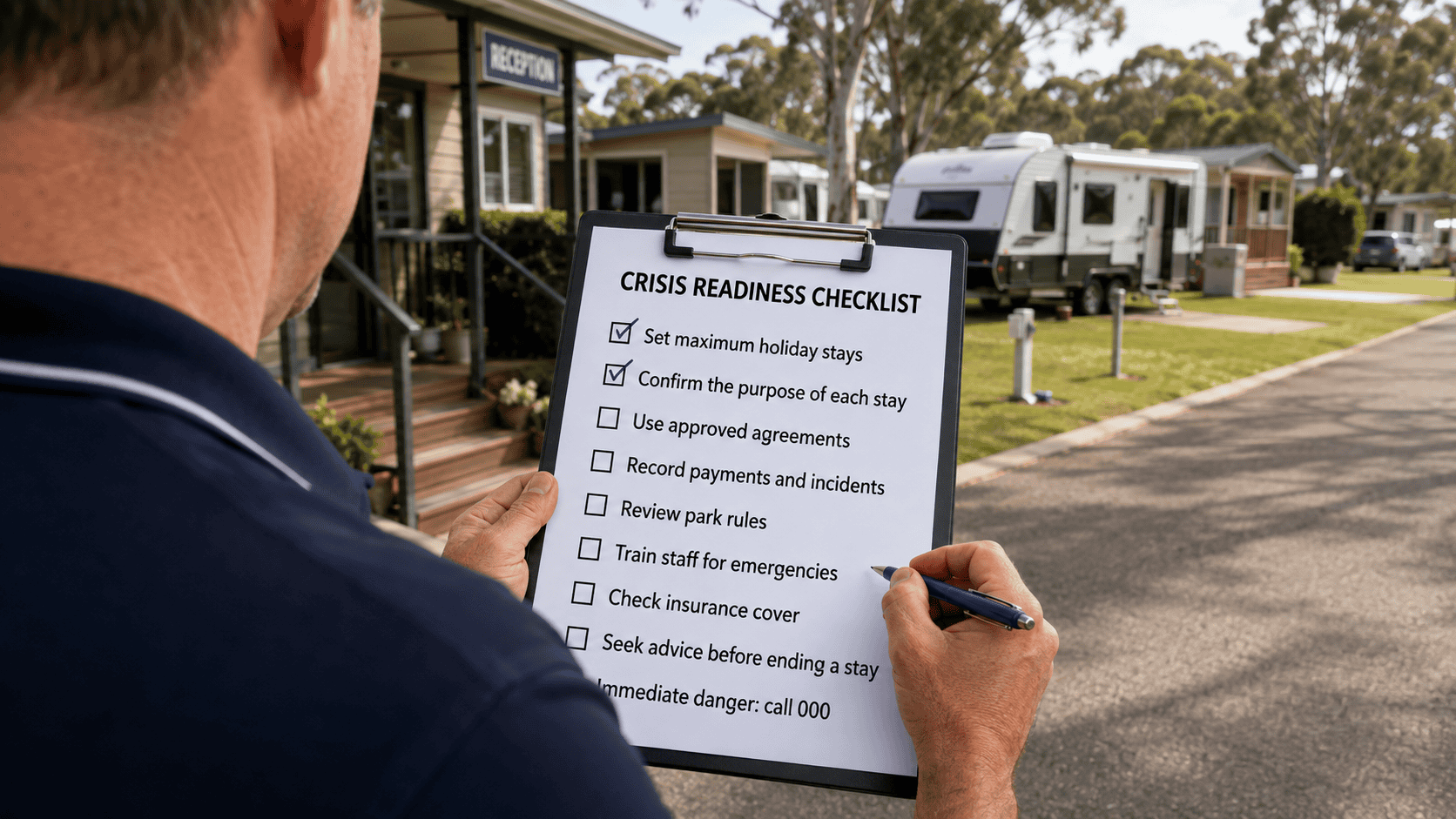
Every park should develop a written policy covering holiday guests, seasonal workers,
emergency accommodation and long-term residents.
Operators should:
- Establish maximum holiday-stay periods and review bookings before those limits are
- reached.
- Confirm whether each stay is genuinely recreational or intended as a principal
- residence.
- Use the correct state-approved agreements, notices and bond procedures.
- Keep accurate records of payments, complaints, incidents and conversations.
- Ensure park rules clearly address visitors, noise, alcohol, drugs, aggression and site
- presentation.
- Train staff to recognise emergencies without expecting them to become counsellors
- or social workers.
- Review public liability, property and business insurance before accepting residential
- occupants.
- Speak with the relevant regulator or an experienced solicitor before issuing a notice
- to leave.
- Contact police on 000 when anyone faces immediate danger. Staff should never be
- expected to physically intervene.
Where a person needs housing, food, financial assistance, family-violence support or
counselling, operators can direct them to Ask Izzy, a free national directory of nearby
support services. Anyone experiencing domestic or family violence can contact
1800RESPECT on 1800 737 732.
Where Operators Can Obtain Advice
Because the laws vary considerably, operators should begin with their state regulator:
- Victoria: Consumer Affairs Victoria – 1300 55 81 81
- NSW: NSW Fair Trading – 13 32 20
- Queensland: Residential Tenancies Authority – 1300 366 311
- Western Australia: Consumer Protection WA – 1300 30 40 54
- South Australia: Consumer and Business Services – 131 882
- Tasmania: CBOS – 1300 13 55 13
- Northern Territory: NT Consumer Affairs – 1800 019 319
Park operators should also speak with their state caravan industry association, local council
and legal adviser.
Australia cannot expect privately operated holiday parks to solve a national housing
shortage. However, parks cannot afford to ignore the issue either. Clear policies, correct
agreements, staff training and early professional advice can protect the business—while
ensuring vulnerable people are treated with dignity rather than becoming someone else’s
problem at the front gate.