
5 Ways Holiday Parks Could Be Saving Money, Making More Money and KeepingGuests Happier
Running a holiday or caravan park in Australia isn’t getting any cheaper. Between
rising electricity bills, staffing challenges, booking commissions and guests
expecting more for their money, operators are being squeezed from several
directions.
But here’s the good news. Some of the biggest opportunities to improve profitability don’t
involve building another cabin, installing a swimming pool or spending a small fortune on
new facilities.
In fact, some of the technology and systems already available to park operators could be
doing a lot more of the heavy lifting.
Here are five opportunities worth investigating.
1. Smarter Bookings Could Mean More Money in the Bank
Every empty cabin or powered site represents potential revenue that disappears the moment
the night passes.
Modern booking and property management systems are becoming increasingly
sophisticated, with features that help operators identify quieter periods, manage pricing,
automate guest communications and encourage bookings when occupancy is traditionally
lower.
Some systems now incorporate AI-assisted revenue management, helping operators adjust
pricing according to demand, seasonal trends and booking patterns.
This doesn’t mean charging everyone more. It means getting smarter about when to offer
value, when to hold your rates and how to fill those frustrating gaps between bookings.
And don’t forget to negotiate! If your park uses third-party booking platforms, when was
the last time you questioned their commission rates? With multiple booking providers
competing for accommodation listings, it’s worth reviewing your arrangements and asking
whether better commercial terms are available. Your booking volume, occupancy and the
value your park brings to a platform may give you more negotiating power than you realise.
After all, if you don’t ask, you don’t get!
The opportunity: Check what your current booking system can already do before investing
in anything new. You might be paying for features you’ve never switched on.
2. Fix the Little Problems Before They Become Expensive Ones
There’s nothing quite like discovering a hot-water system has packed it in on a fully booked
Saturday afternoon. Particularly when the nearest plumber is two hours away and charging
accordingly.
Reactive maintenance can be one of the most expensive ways to run a holiday park, yet it’s
surprisingly easy to fall into the habit of fixing things only when they break.
Newer digital maintenance management tools allow operators to schedule routine
inspections, track equipment servicing, record recurring faults and receive reminders before
important maintenance is overdue.
Everything from air-conditioning units and hot-water systems to amenities blocks,
playground equipment, pumps and cabin appliances can be included.
Some systems even allow staff to report issues directly from their phones, complete with
photos, helping management identify problems before they become major repairs or guest
complaints.
And you don’t necessarily need expensive software. A well-organised digital maintenance
schedule can be a great starting point.
The opportunity: Identify your ten most expensive or troublesome pieces of equipment and
introduce a preventative maintenance schedule. A little attention today could save a very
unpleasant invoice tomorrow.
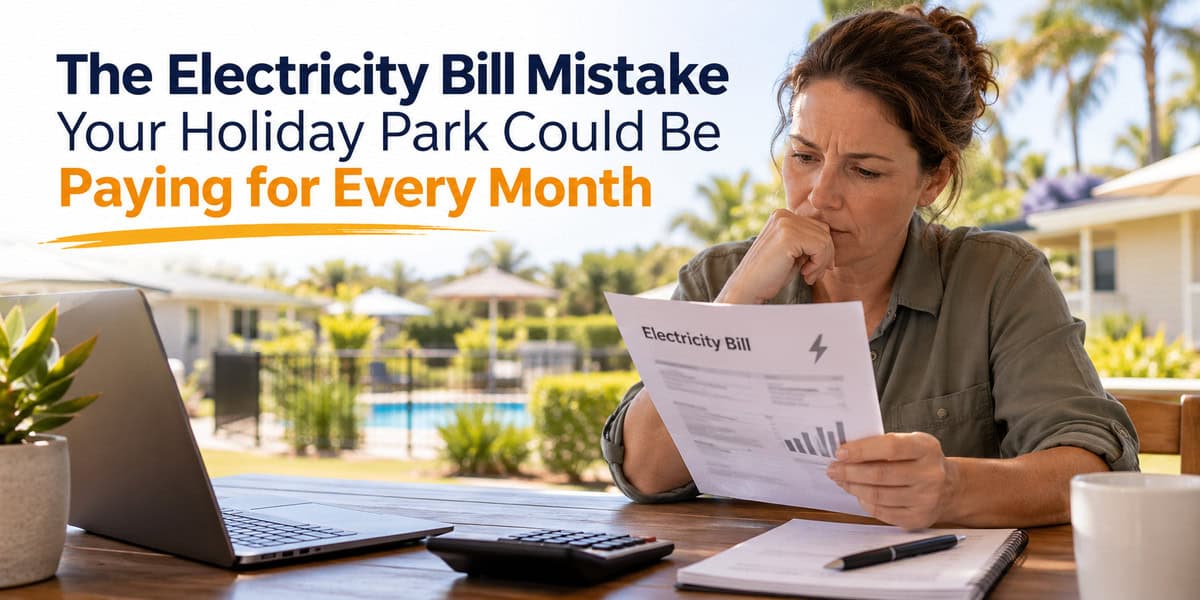
3. Your Electricity Bill Might Be Hiding Some Unpleasant Surprises
Electricity is one of those expenses that quietly eats into profitability while everyone is busy
looking after guests.
And while solar panels and battery storage attract plenty of attention, they’re not necessarily
the first place operators should look.
Electricity tariffs, peak-demand charges, inefficient hot-water systems, ageing equipment
and unnecessary overnight consumption can all contribute to higher operating costs.
In Queensland, industry discussions have highlighted just how significant fixed and demand
charges can be for caravan parks.
The good news is that improvements don’t always require major capital expenditure.
Sometimes reviewing the tariff, adjusting equipment operating times or identifying unusual
consumption can deliver worthwhile savings.
The opportunity: Have your electricity account and usage professionally reviewed before
spending thousands on new equipment. The cheapest kilowatt-hour is often the one you
never needed to use.

4. Let Technology Handle the Repetitive Questions
Anyone who has worked in a holiday park reception knows the questions.
What time is check-in? Can we bring the dog? Do you have drive-through sites? Is the pool
heated?
All perfectly reasonable questions. But answering the same ones repeatedly takes time
away from looking after guests who are actually standing at the counter.
Automated emails, online information systems and AI-assisted messaging tools can now
handle many routine enquiries, including outside reception hours.
Used properly, they can also provide arrival instructions, park information, local attraction
suggestions and reminders.
The trick is making technology support your staff, not replace the personal service guests
appreciate.
The opportunity: Start by automating your ten most frequently asked questions. Keep a
real person available for anything complicated.
5. Your Next Booking Could Come From Someone Who Stayed Last Month
Holiday parks spend considerable time and money attracting new guests. But what about the
people who’ve already stayed, enjoyed themselves and know exactly where you are?
Your existing guest database could be one of your most underutilised business assets.
Modern booking systems can help operators segment guests, send appropriate follow-up
communications, promote quieter periods and encourage return visits.
Families who visited during school holidays might appreciate an early booking reminder.
Touring couples could be interested in a midweek offer. Regular travellers might respond to a
simple invitation to return.
Naturally, communications should respect guest preferences and Australian marketing
requirements.
The opportunity: Look at how often you communicate with previous guests. A relevant,
well-timed invitation could be more valuable than another expensive advertising campaign.
The Bottom Line
None of these opportunities requires a park to become a technology company.
Whether you’re operating a small independent caravan park, a council-owned facility or a
large holiday park, the principle is much the same: make better use of what you’ve
already got.
Before spending money on another system, ask what your existing software can do, where
revenue is slipping away and which everyday tasks are consuming unnecessary time.
You might discover that the next improvement to your park’s profitability isn’t something you
need to build.
It’s something you simply need to switch on.