The $10,000 Tree Problem: Who Pays When a Giant Gum Comes Down?
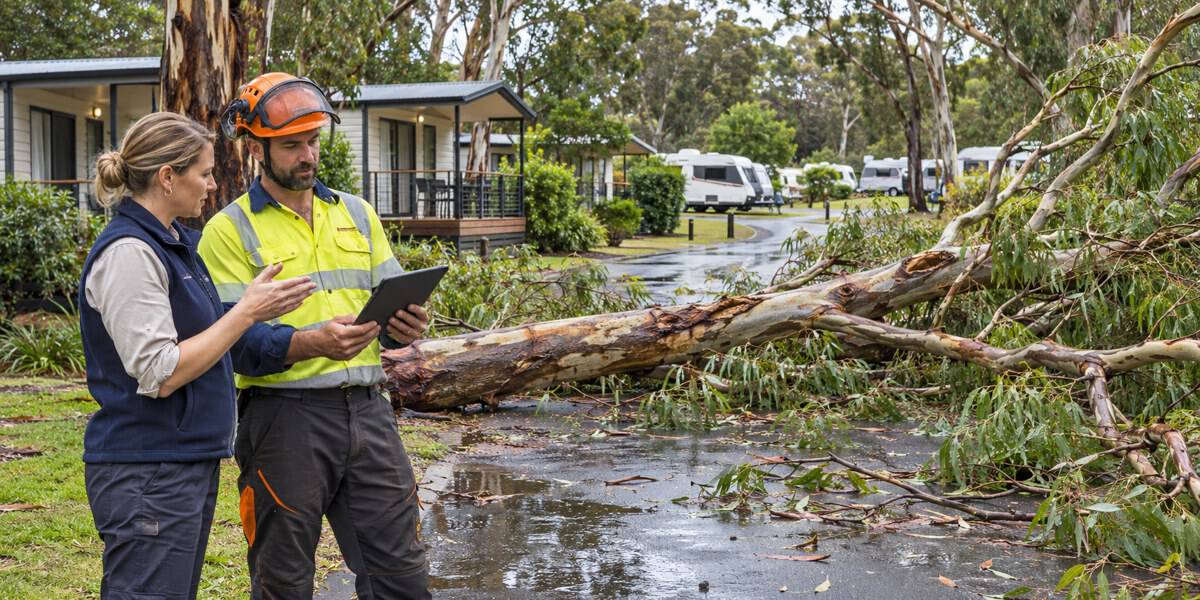
A storm rolls through overnight. By morning, a large gum is lying across the park’s internal
road, blocking access to a row of sites. Nobody is hurt, the cabins are untouched and the
amenities building has escaped damage.
That is the good news. The next question is who pays to get the tree out of the way.
For holiday park owners, the answer can depend on a distinction that is easily overlooked:
insurance covering storm damage does not necessarily cover every expense a storm leaves
behind.
A fallen tree isn’t always a property damage claim
Tree removal and repairing insured property are different costs, even when they arise from
the same incident.
If a tree crashes through a cabin roof, the damage and associated removal costs may fall
within the policy’s property damage and debris removal provisions. If it lands across open
ground without damaging insured property, the claim may need a separate benefit to
respond.
The Financial Rights Legal Centre warns that some policies only cover tree removal when
the tree damages insured buildings or contents. Its guidance concerns household insurance,
but it highlights the wording issue park operators should investigate in their own commercial
cover. Financial Rights Legal Centre
For a bushland park, a tree can create a serious operational problem without touching a
building. Blocked access, an unusable recreation area and the need for specialist machinery
can leave an operator facing urgent work and an uncertain bill.
The benefit worth asking about
All Parks Insurance advertises a specific $10,000 benefit for removing fallen trees greater
than four metres in height that have not damaged insured property.
That addresses the precise scenario operators might otherwise overlook: a substantial tree
is down, removal is necessary, but there is no damaged cabin or amenities block to anchor
the claim.
However, the advertised amount is a cover limit, not a promise that every removal invoice
will be paid. All Parks states that terms, conditions, limits, exclusions and excesses apply.
Operators should have their broker confirm the applicable wording and schedule. All Parks
Ask whether the limit applies per event or across the insurance period, what happens if
several trees fall, and which expenses qualify. Crane hire, cutting, cartage, stump removal
and reinstating disturbed ground should each be clarified before assuming they form one
covered job.
When the road or recreation area is damaged
“No building damage” does not necessarily mean “no insured property damage”.
A falling tree might damage a sealed road, underground services, playground equipment or
other park infrastructure. Whether those assets are insured depends on the policy’s
definitions, selected cover and limits.
Give the broker a complete account of what happened. A blocked road and a broken road
are different claim scenarios. Likewise, clearing a tree, repairing equipment and replacing
landscaping may involve separate provisions.
What to do before the chainsaws start
Keep guests and staff clear, isolate the affected area and use qualified contractors. Where
safe, photograph the tree in place, its surroundings and any damage before work begins.
Contact the broker promptly. Ask what emergency work can proceed, what approval is
required and what evidence the insurer needs. Keep itemised quotes, invoices and records
of necessary urgent action.
The useful question at renewal is straightforward: “If a giant gum falls without damaging
insured property, exactly what will our policy pay to remove it?”
It is a better conversation to have while the road is still open.