HOLIDAY PARK BOOKING SCAM ALERT: Are Your Guests Being Targeted?
A major security incident involving RMS Cloud has exposed holiday park guests to convincing fake payment requests. With BIG4, G’day Parks and other major operators affected, here’s what every caravan and holiday park manager needs to know — and why warning your guests now could save them thousands.
What’s Happening?
Australian holiday park operators are facing a serious cybersecurity headache following a security incident involving RMS Cloud, one of the industry’s most widely used booking and property management systems.
Reports emerged in late October 2026 of holidaymakers receiving fraudulent emails, SMS and WhatsApp messages claiming to be from the parks where they’ve booked accommodation.
Major operators including BIG4 Holiday Parks, Discovery Parks, G’day Parks and Reflections Holidays have been linked to the incident, with warnings being issued to guests.
The worrying part? These aren’t necessarily your typical poorly written scam messages from someone claiming to be a Nigerian prince.
Some contain genuine guest names, booking references, accommodation details and
arrival dates, making them remarkably convincing.
RMS Cloud has confirmed that guest names, contact information and booking details were accessed. Importantly, the company says credit card and payment information was not accessed through the incident.
Investigations are continuing.
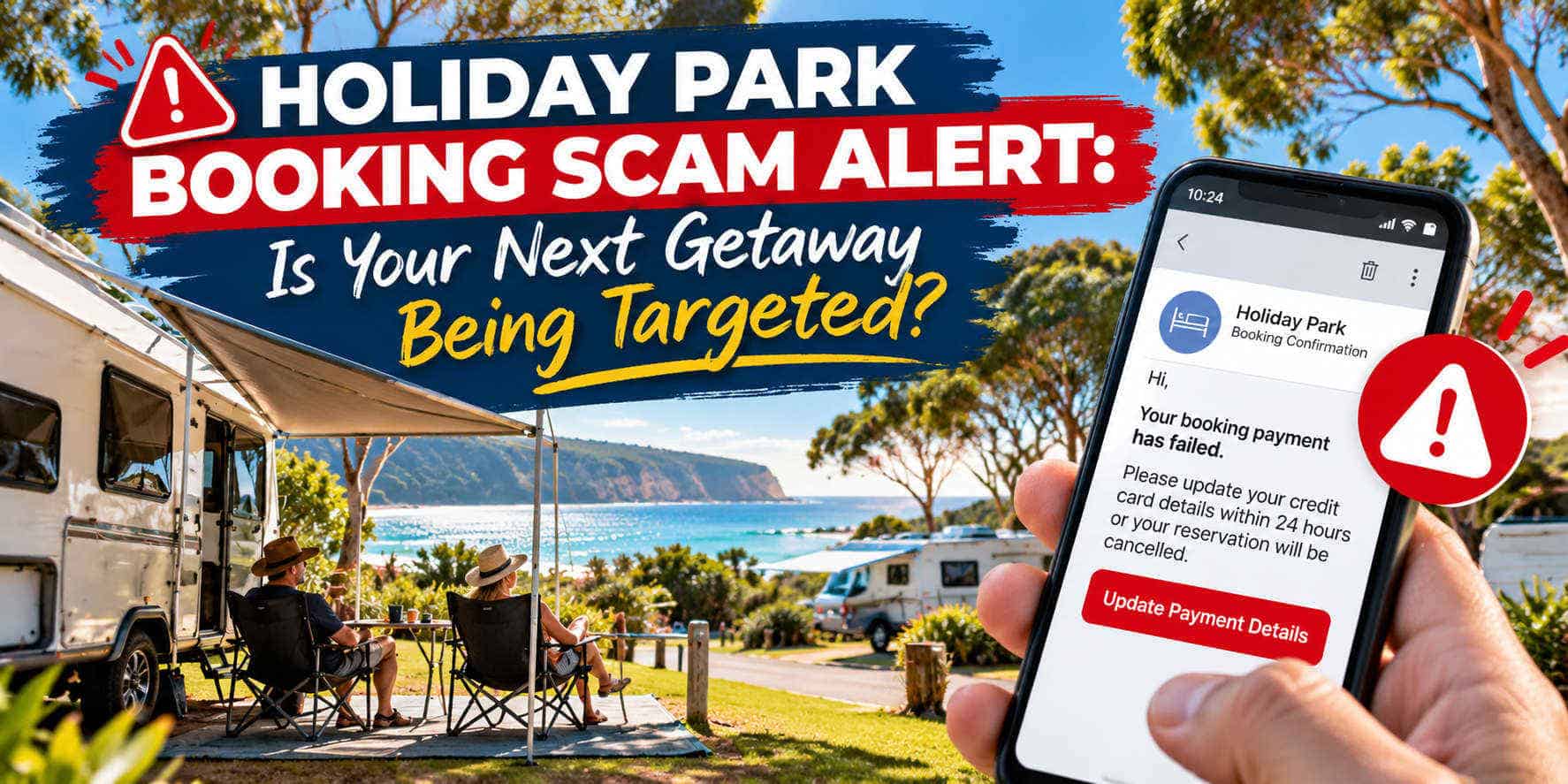
How the Scam Works
The scam is relatively straightforward, but potentially devastating.
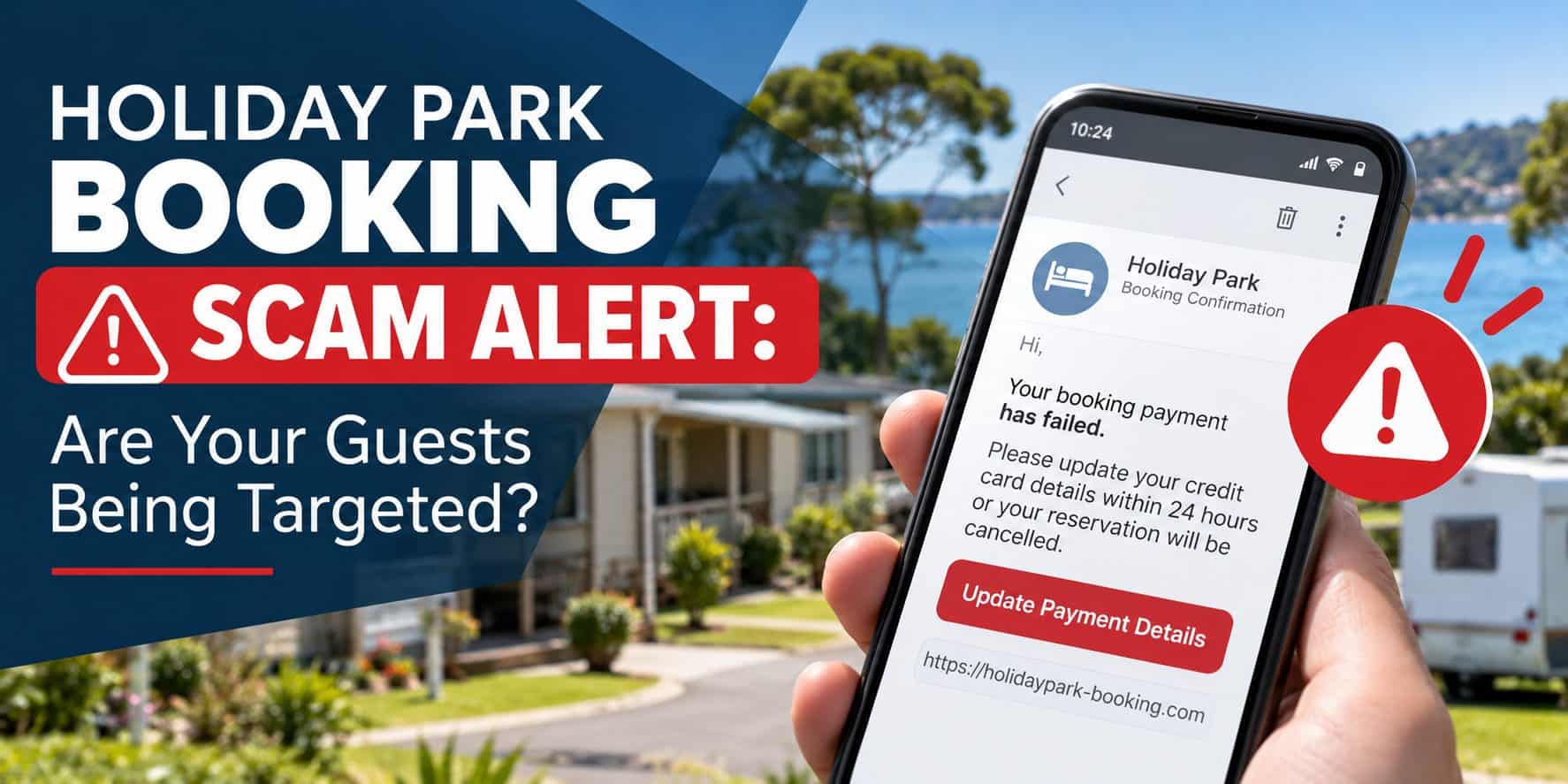
A guest receives what appears to be an official communication from their holiday park, often claiming there’s a problem with their payment.
The message might say:
“Your booking payment has failed. Please update your credit card details within 24 hours or your reservation will be cancelled.”
A link directs the guest to a professional-looking payment website where they’re asked to enter their card details.
Unfortunately, that website belongs to the scammers.
With artificial intelligence making fraudulent communications increasingly polished, poor spelling and dodgy formatting are no longer reliable warning signs.
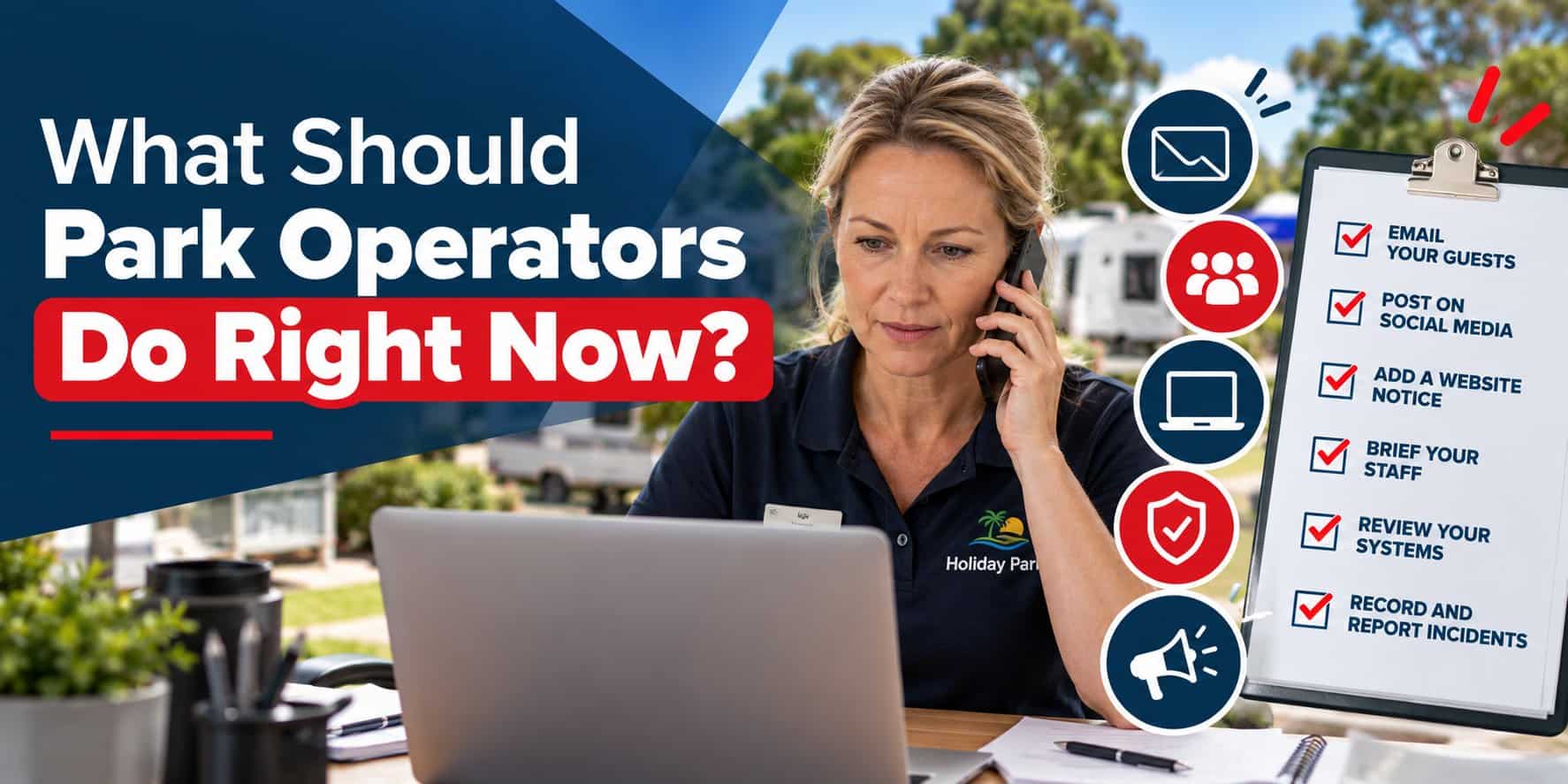
What Should Park Operators Do Right Now?
Whether your park uses RMS Cloud or another booking platform, this is a timely reminder
that guest security extends well beyond the reception desk.
- Email your upcoming guests. Send a clear warning explaining the scam and reminding guests never to provide payment details through unexpected links.
- Post warnings on social media. Use Facebook and Instagram to alert existing and future guests. Pin the warning to the top of your Facebook page.
- Add a website notice. A simple booking security alert on your homepage or booking confirmation page can provide additional reassurance.
- Brief your staff. Reception and reservations teams should understand the scam, recognise suspicious messages and know how to respond to concerned guests.
- Review your systems. Check booking platform access, staff permissions, passwords and two-factor authentication. Contact your software provider for relevant security updates.
- Record and report incidents. Ask guests to share suspicious communications with your park without clicking the links. RMS customers should forward relevant reports to RMS Support.
What Should You Tell Your Guests?
Keep the message simple:
- Never click unexpected payment links received through email, SMS or WhatsApp.
- Be suspicious of urgent demands for payment or threats of cancellation.
- Don’t assume a message is genuine simply because it contains correct booking information.
- Contact the park directly using the telephone number published on its official website.
- If payment details have already been provided, contact the bank immediately.
Importantly, reassure guests that receiving a fraudulent message does not automatically mean their reservation has been cancelled.
Protecting Your Guests Protects Your Business
For park operators, the damage from these scams goes beyond stolen money.
Guests may blame the park, lose confidence in its booking processes or reconsider future stays.
The best defence is proactive communication.
A five-minute email, a Facebook warning and a well-informed reception team could prevent a guest from losing thousands of dollars — and protect the reputation you’ve spent years building.
Useful resources:
RMS Cloud security updates: https://rmscloud.statuspage.io/
Scamwatch: https://www.scamwatch.gov.au/
Australian Cyber Security Centre: https://www.cyber.gov.au/
IDCARE: https://www.idcare.org/ — 1800 595 160
The Kui Konnect takeaway: Don’t wait for a guest to become a victim before communicating. Even if your park hasn’t been directly affected, a little prevention today could save an awful lot of explaining tomorrow.