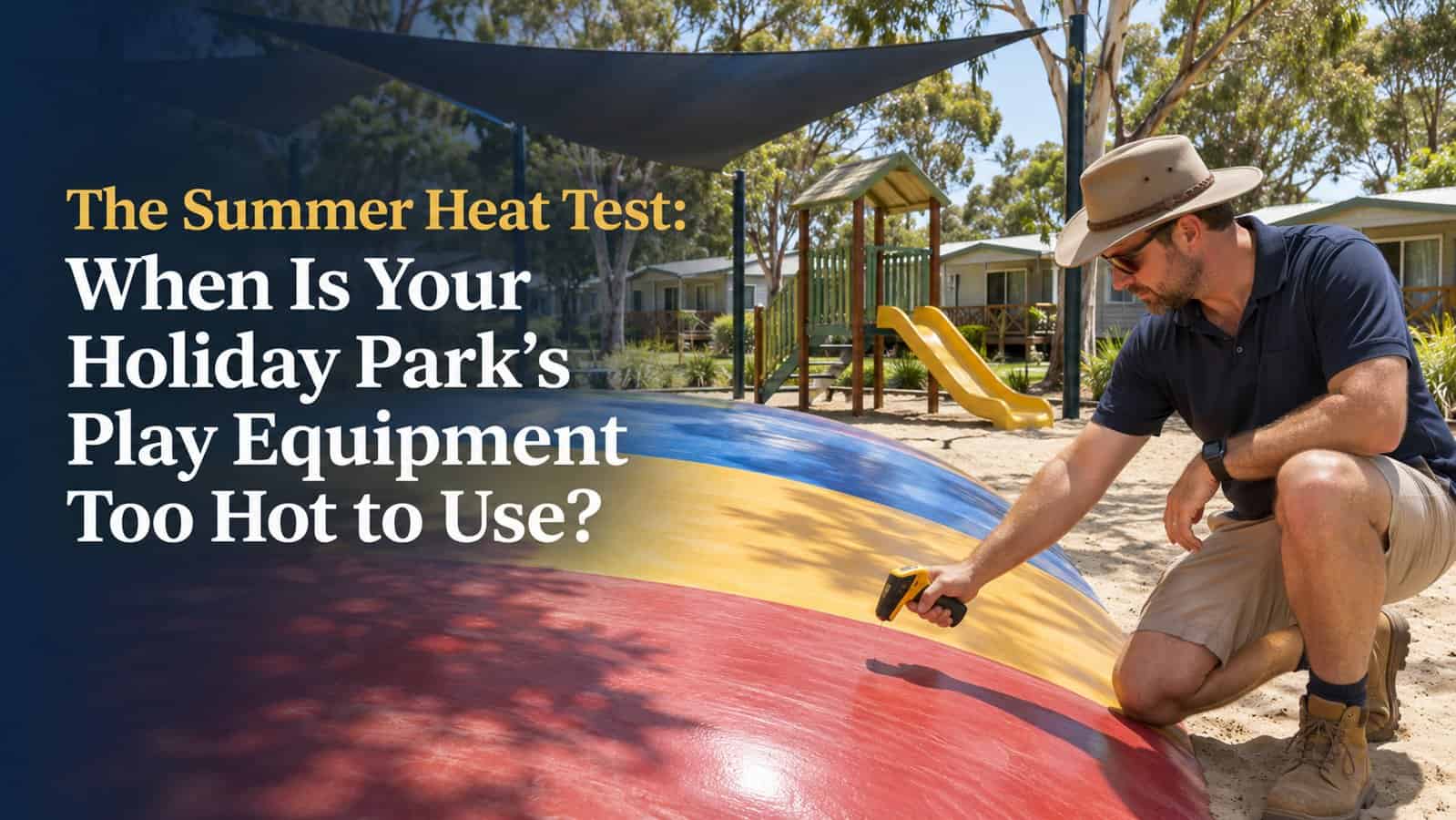
Is Your Caravan Park Actually Ready for a Bushfire Emergency?
Summer is approaching, bookings are rolling in and holiday parks across Australia are preparing for their busiest time of year. But while operators are focused on welcoming guests and filling sites, there’s one question worth asking before the temperature really starts climbing: what happens if a bushfire threatens your park?
Summer Holidays Come With Summer Risks
Across Australia, holiday parks, caravan parks, camping grounds and cabin accommodation operators are gearing up for the summer rush.
Caravans will be rolling through the gates, cabins will be filling up, tents will be popping up everywhere and the smell of sausages on the barbecue will become a familiar part of daily life.
But while operators prepare for happy holidaymakers, emergency authorities are preparing for something considerably less enjoyable.
In Victoria, fire safety compliance remains a significant responsibility for caravan park operators, with regulations covering emergency planning, firefighting equipment, vegetation management and emergency vehicle access.
Meanwhile, on 29 October 2026, Townsville conducted a major emergency exercise simulating a fast-moving bushfire threatening homes, roads and critical infrastructure. The exercise tested evacuation planning, emergency communications and coordination between authorities.
The message for park operators everywhere is simple: having an emergency plan is one thing. Knowing it will actually work is another.
When the Worst Actually Happens: Bimbi Park, Victoria
In January 2025, guests staying at Bimbi Park near Cape Otway experienced exactly the sort of emergency every accommodation operator hopes will never happen.
A bushfire broke out nearby during the night, forcing the evacuation of campers and holidaymakers, many of whom were asleep when the warnings came.
Fortunately, park owner Katrina Fotinas and her family were prepared.
The family had operated the park for approximately 20 years and reviewed their bushfire emergency plan annually, assigning family members responsibility for evacuating different sections of the property.
At approximately 1.30am, they held a quick briefing before putting their plan into action.
Despite the confusion of waking sleeping guests, including international visitors, everyone was evacuated from the park within an hour.
There were challenges, including a guest misplacing their car keys, but the evacuation was successful.
The owners later credited their preparation and the cooperation of guests.
It’s a powerful reminder that an emergency plan isn’t just paperwork designed to satisfy an inspector. It can genuinely save lives.
This Isn’t Just a Victorian Problem
Whether your park is located in the Victorian High Country, coastal New South Wales, regional Queensland, Western Australia’s south-west, Tasmania or the Northern Territory, bushfire and grassfire risks deserve serious consideration.
Even parks situated in towns or coastal communities can be affected by nearby fires, smoke, road closures and interrupted access.
And while fire safety legislation differs between states and territories, the underlying responsibility remains the same: operators need to understand their risks, meet applicable requirements and prepare their staff and guests.
A remote bush camping ground may face very different challenges from a large coastal holiday resort, but neither can afford to assume an emergency won’t happen.
Five Things Every Park Operator Should Check Before Summer
1. Can Everyone Get Out Safely?
Imagine needing to evacuate 150 caravans, motorhomes, tents and cabins at short notice.
Are emergency exits clearly identified? Can fire trucks access the property? What happens if the main entrance is blocked?
Importantly, evacuation arrangements must account for the fact that moving caravans and large motorhomes takes time. In some emergencies, attempting to tow a caravan could create dangerous congestion.
Plans should identify appropriate evacuation triggers, safe destinations and alternative arrangements in consultation with local emergency authorities.
2. Does Every Staff Member Know Their Responsibilities?
Who calls emergency services? Who alerts guests? Who checks cabins, amenities blocks and camping areas?
What happens if the park manager isn’t there?
Permanent, casual and seasonal employees should understand their responsibilities. A simple emergency drill before the Christmas rush could reveal problems nobody anticipated.
3. How Will You Contact Every Guest?
A noticeboard outside reception won’t help much when half your guests are at the beach.
Consider SMS notifications, PA systems, emergency contact details and procedures for reaching guests when mobile reception fails.
International visitors, elderly guests, children and people requiring evacuation assistance need particular consideration.
The Bimbi Park experience demonstrated just how important clear communication and calm instructions can be.
4. Are Your Grounds and Facilities Fire Ready?
Check long grass, overhanging vegetation, LPG storage, electrical infrastructure, firefighting equipment and access roads.
Ensure guests understand local fire restrictions, including campfire rules, Total Fire Bans and restrictions affecting certain cooking equipment.
Requirements vary across Australia, and operators should regularly check the latest advice from their relevant state or territory fire authority.
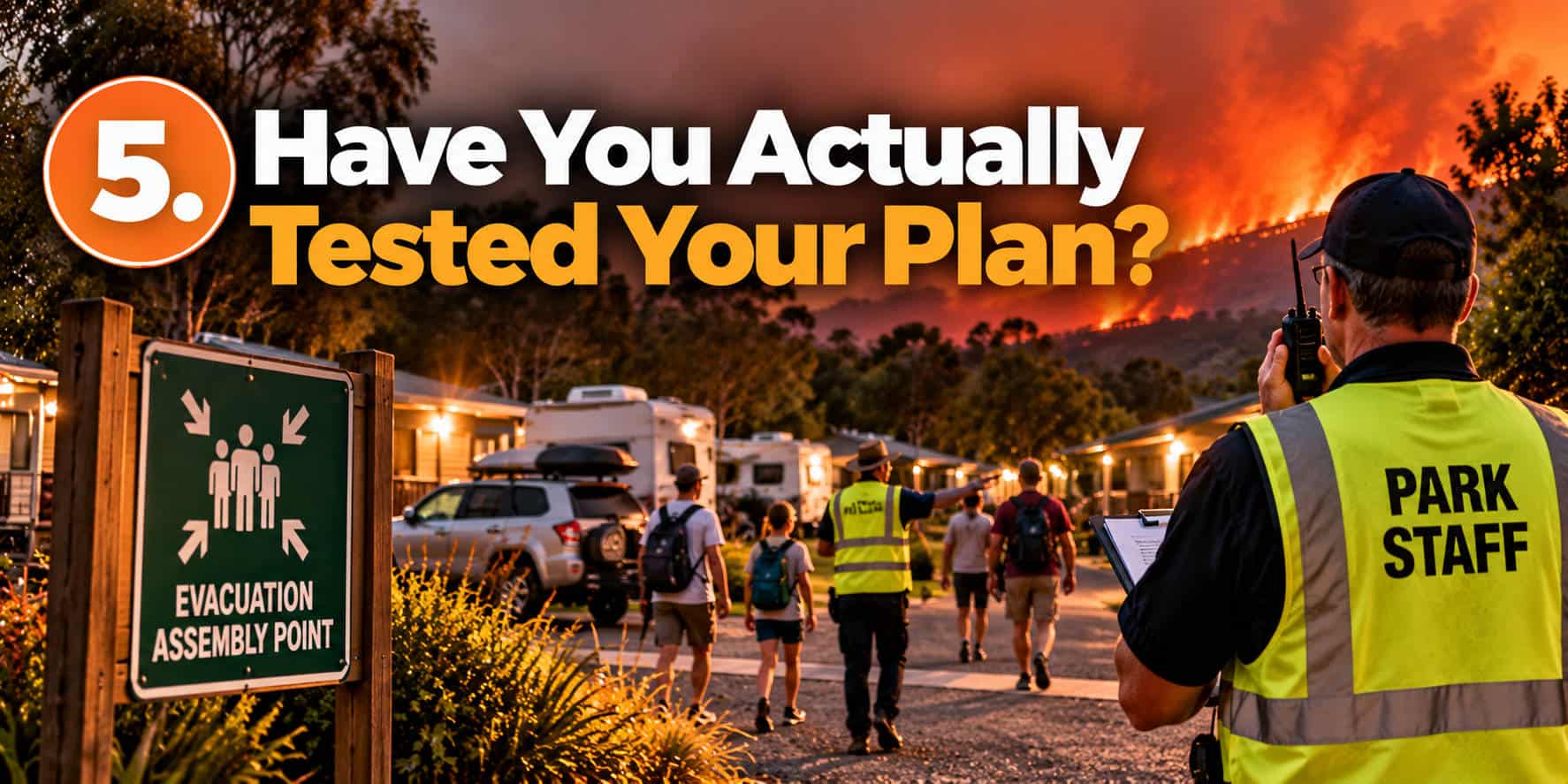
5. Have You Actually Tested Your Plan?
Townsville’s recent emergency exercise demonstrated the importance of testing decisions before disaster strikes.
Holiday parks can apply the same principle on a smaller scale.
Run a simulated evacuation. Test your communication systems. Identify bottlenecks. Make sure everyone knows where to go.
And don’t forget to review your procedures whenever park layouts, staffing or facilities change.
Preparation Isn’t Optional
For park operators, bushfire readiness isn’t simply about meeting regulations or protecting buildings.
It’s about protecting guests, staff, livelihoods and the reputation of the wider accommodation industry.
Bimbi Park showed what preparation can achieve when an emergency becomes reality.
Before summer arrives, take some time to review your emergency procedures, speak with your staff and identify anything that needs attention.
Because when the park is full, temperatures are climbing and emergency warnings start appearing, the last thing you want to discover is that your emergency plan only works on paper.
Useful resources for park operators
For nationally relevant fire safety information, operators should consult their own state or territory emergency services and fire authority. The following resources provide useful starting points:
- CFA – Caravan Park Fire Safety
- Australian Fire Danger Rating System
- Emergency Alert – Australian Government
- ABC News – Bimbi Park Bushfire Evacuation
- Townsville – October 2026 Bushfire Exercise