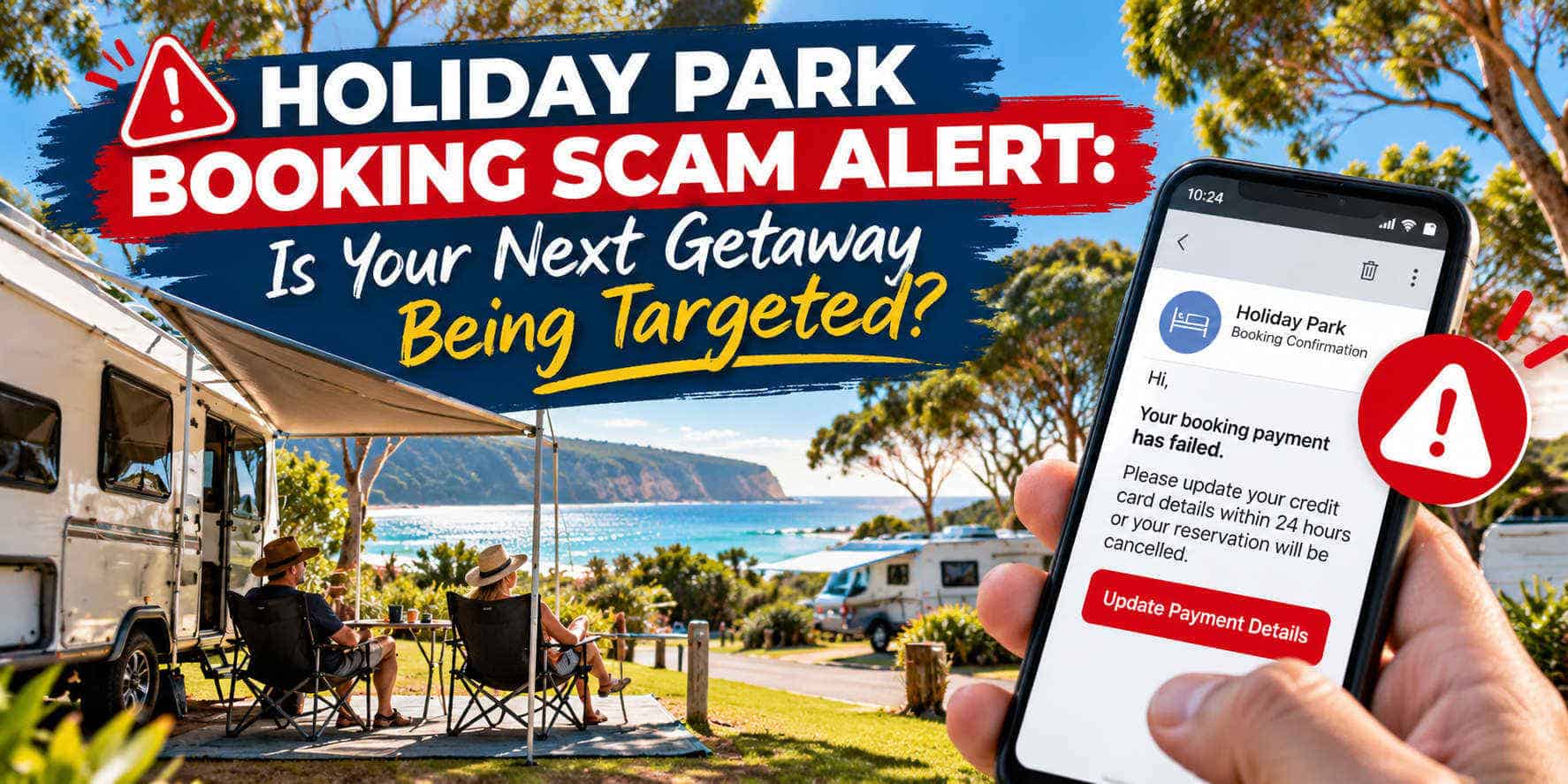
HOLIDAY PARK BOOKING SCAM ALERT: Is Your Next Getaway Being Targeted?
Booked a caravan site, camping spot or holiday park cabin? Scammers are targeting Australian holidaymakers with convincing fake payment requests, sometimes using your actual booking details. Here’s how to protect your money, your booking and your next getaway.
Your Holiday Booking Could Be a Target
You’ve booked the caravan park, organised the camping gear, reserved a cabin or perhaps planned a few weeks on the road. Everything’s looking good until an unexpected message arrives telling you there’s a problem with your booking.
It looks official. It might even have your name, booking reference, arrival date and the name of the holiday park you’re visiting.
Then comes the catch.
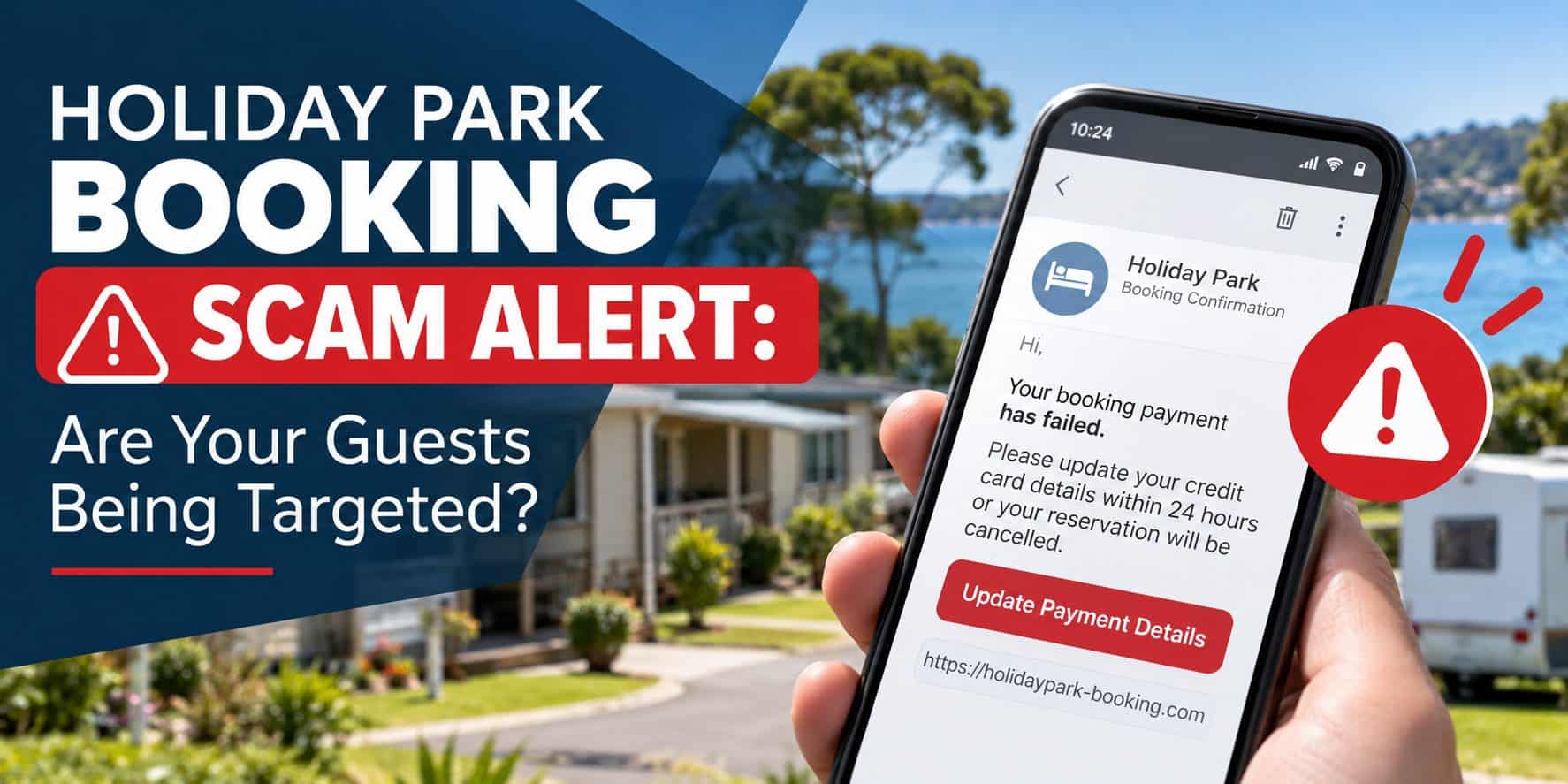
Your payment has supposedly failed, and unless you update your credit card details immediately, your booking will be cancelled.
STOP! Before you click anything, there’s something you need to know.
A security incident involving RMS Cloud, a booking management system used by numerous Australian accommodation providers, has resulted in holidaymakers receiving fraudulent payment requests.
Major holiday park groups, including BIG4, Discovery Parks, G’day Parks and Reflections Holidays, have been associated with warnings about the incident.
RMS Cloud has confirmed that some guest names, contact information and booking details were accessed. The company says credit card and payment information was not accessed through the incident.
However, scammers can use the booking information they obtain to make their messages appear remarkably genuine.
How Are Holidaymakers Being Scammed?
The scam usually starts with an email, text message or WhatsApp communication that appears to come from your holiday park.
It might say something like:
“Your booking payment has failed. Please update your payment details within 24 hours to avoid cancellation.”
The message contains a link to what looks like a legitimate payment page.
Unfortunately, entering your credit card details could hand them directly to criminals.
And forget the old advice about spotting scams through terrible spelling and grammar. With artificial intelligence, scammers can now create messages that look every bit as professional as genuine booking confirmations.
Five Warning Signs You Should Never Ignore
- Unexpected payment requests: You’ve already paid a deposit or settled your account, but suddenly you’re being asked for more money.
- Urgent deadlines: Messages threatening to cancel your holiday unless you pay immediately.
- Suspicious links: Website addresses that look similar to the park’s official website but contain unusual words or spelling.
- Unknown WhatsApp numbers: Someone claiming to represent your holiday park contacts you unexpectedly.
- Requests for card details: You’re asked to enter or confirm payment information through a link you weren’t expecting.
Remember, even if the message contains your correct booking details, that doesn’t prove it’s genuine.
What Should You Do If You Receive a Suspicious Message?
The golden rule is simple: Don’t click the link, don’t reply and don’t provide any payment information.
Instead, contact your holiday park directly using the telephone number published on its official website or your original booking confirmation.
Ask whether there’s genuinely an issue with your reservation.
If everything is fine, delete the suspicious message after reporting it to the park.
And don’t panic. Receiving a scam message doesn’t automatically mean your booking has been cancelled or your money has disappeared.
Already Clicked the Link or Entered Your Details?
Act quickly.
Contact your bank immediately if you’ve entered credit card or banking information. Ask them to secure your accounts and discuss reversing any unauthorised transactions.
Change any passwords you’ve entered, particularly if you’ve reused them elsewhere.
Enable two-factor authentication wherever possible.
Contact the holiday park to confirm your actual booking is secure.
Report the scam to Scamwatch at https://www.scamwatch.gov.au/
Contact IDCARE on 1800 595 160 or visit https://www.idcare.org/ for assistance with identity and cybercrime concerns.
Don’t Let Scammers Ruin Your Next Adventure
Whether you’re heading off in the caravan for three months, pitching a tent for the weekend or treating the family to a few nights in a holiday park cabin, the last thing you need is someone stealing your holiday money.
The good news is that a simple phone call can often stop these scams in their tracks.
Our advice? If a holiday park unexpectedly asks you for money, take 60 seconds to check before you pay.
Your next getaway should be about relaxing, exploring and making memories — not explaining to the bank why someone on WhatsApp has just helped themselves to your holiday funds.
Stay alert, travel safely and enjoy the journey!