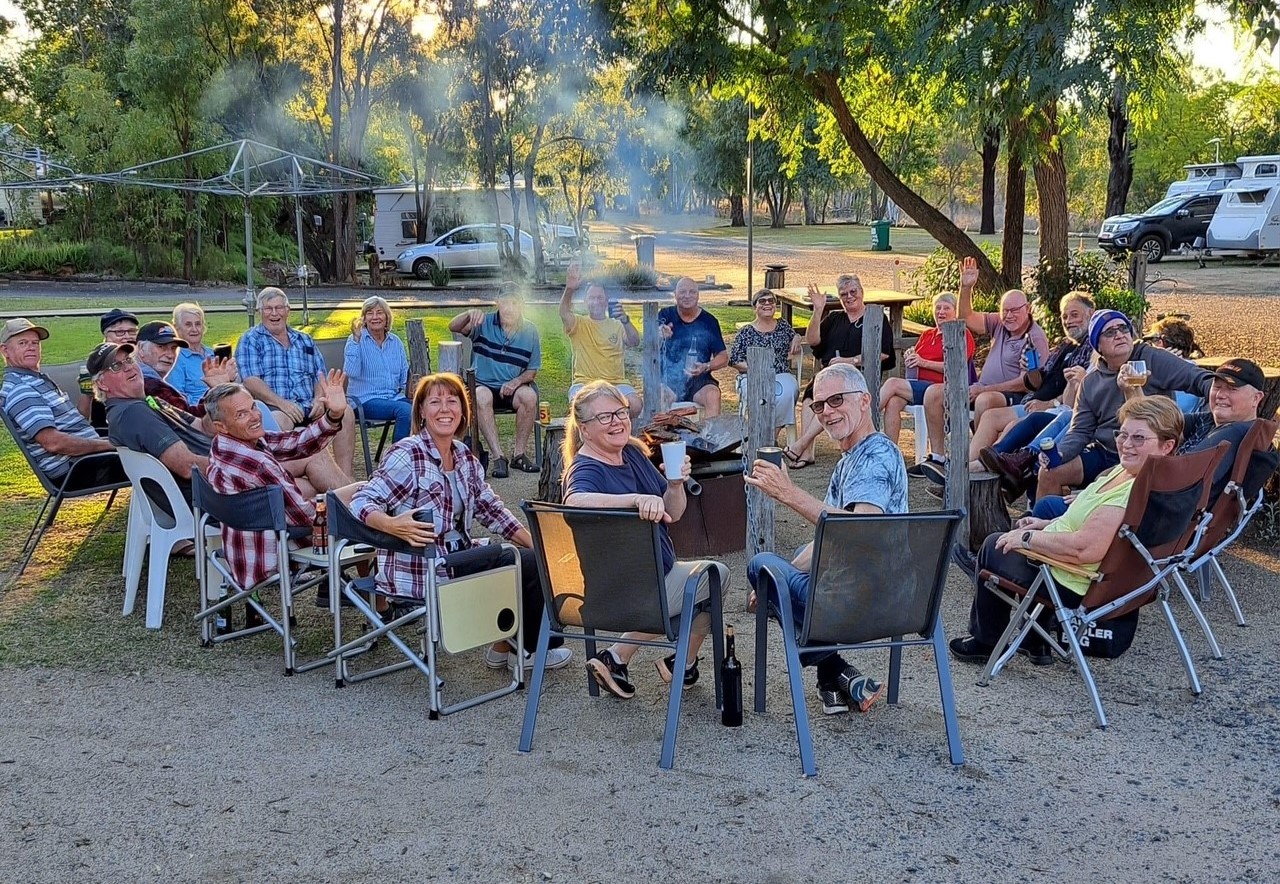
Tailem Bend: More Than Just a Bend in the Road
Tailem Bend is much more than one of those towns many travellers have driven through
without properly stopping. It has way more to offer than most people realize.
It sits at a major junction between Adelaide, Melbourne, the Murraylands and the Limestone
Coast, so many make the mistake of treating it as somewhere to refuel, grab a pie and keep
moving.
We based ourselves beside the Murray River at the Kui Parks Waterfront Holiday Park. If
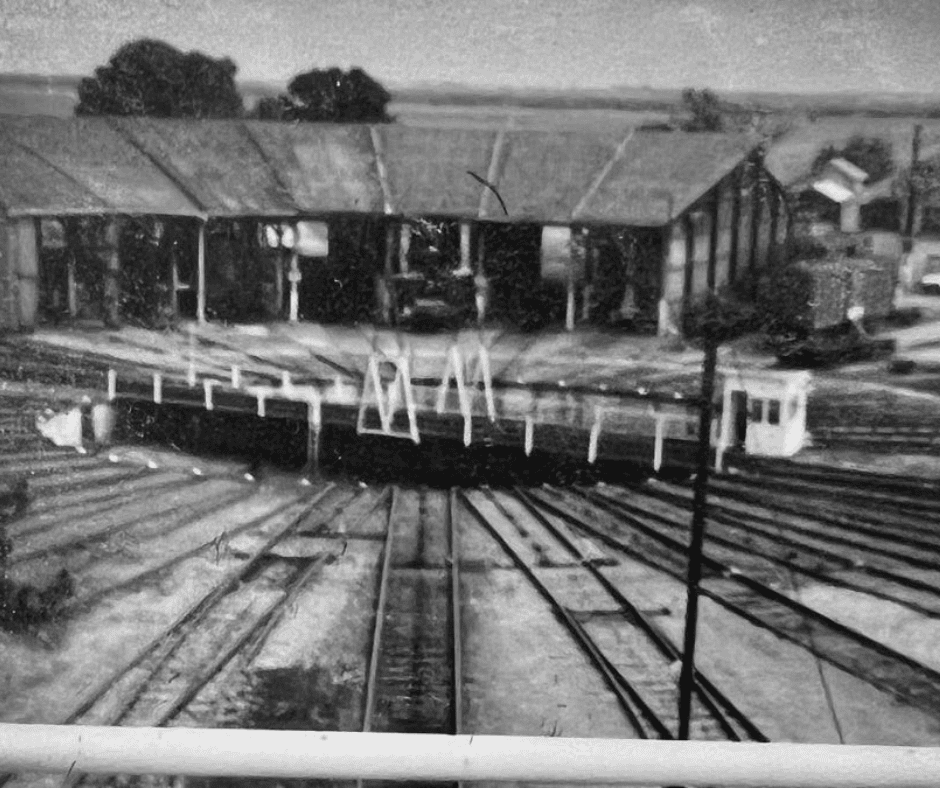
you have never been, what you will find is an interesting little town with a strong railway
story, one of Australia’s most unusual historic attractions, a world-class motorsport complex
and a surprisingly convenient location for exploring a much wider slice of South Australia.
It turns out there is considerably more to “Tailem” than highway signs, trucks and a bloke in
the passenger seat asking, “Are we there yet?”
Getting to Tailem Bend
Tailem Bend is approximately 96 kilometres southeast of Adelaide, with the drive taking a
little over an hour in normal conditions. The South Eastern Freeway makes it an easy run,
although caravanners should allow extra time for the descent through the Adelaide Hills and
changing traffic conditions.
From nearby Murray Bridge, it is only around 25 kilometres or 20 minutes by road.
Victor Harbor is approximately 114 kilometres away, taking around one hour and 25 minutes,
making Tailem Bend a possible inland base for a longer Fleurieu Peninsula and Murraylands
road trip.
From Melbourne, the direct inland drive is approximately 625 kilometres and takes about
seven hours without long stops. Realistically, when towing a caravan—and after accounting
for fuel, lunch, roadworks and the compulsory argument over whose turn it is to buy
coffee—we would allow eight hours or more. As it’s a road trip, longer drives, especially with
a Caravan, perhaps break up the trip with an overnight stay somewhere at the halfway point.
Tailem Bend also marks an important decision point for road-trippers. From here, travellers
can continue towards Adelaide, follow the Princes Highway through the Coorong, head east
along the Dukes Highway towards Melbourne or turn into the Murray Mallee.
A Town Shaped by the River and Railway
Tailem Bend stands on the traditional Country of the Ngarrindjeri people, whose connection
with the Lower Murray, Lakes and Coorong stretches back thousands of years.
There are several explanations for the town’s unusual name. The most widely accepted links
it to the Ngarrindjeri word thelim, meaning “bend”, referring to the sharp bend in the Murray
River. Another interpretation comes from Thelum Ki, translated as “bent water”.
European development began gathering pace during construction of the railway towards
Victoria in the 1880s. A railway workers’ camp was established among native pine trees in
1884 and became known as Pine Camp. The railway opened in 1886, and Tailem Bend was
officially proclaimed the following year.
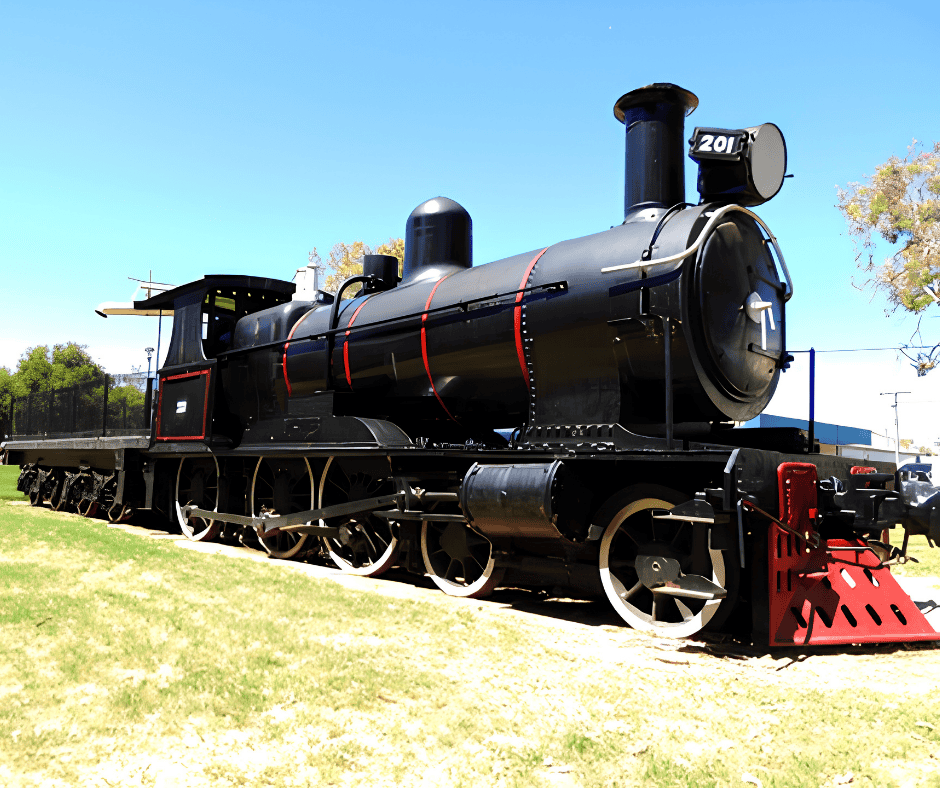
The town grew into a major railway junction and service centre. Locomotives were refuelled,
maintained and changed here, while branch lines headed into the Murray Mallee and
Riverland. For generations, the railway did not merely pass through Tailem Bend—it
provided jobs, housing, identity and the rhythm of everyday life.
Although passenger services eventually ceased and many of the branch lines closed, the
railway remains visually and historically central to the town.
Exploring Railway Terrace
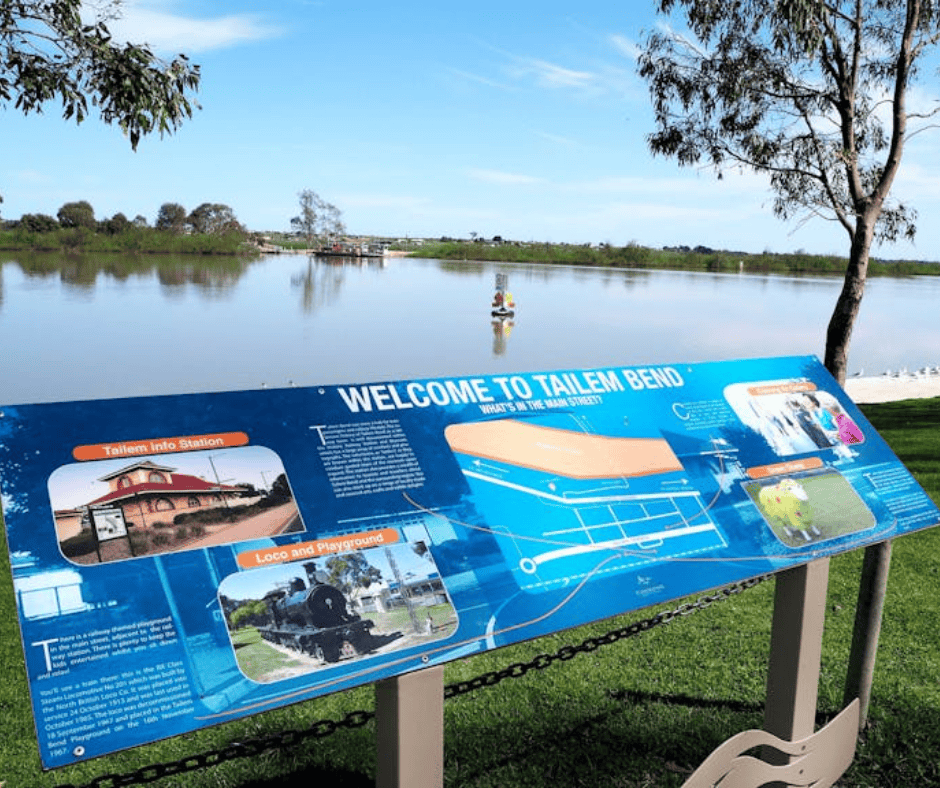
Railway Terrace is Tailem Bend’s main street and the best place to begin exploring. It is not
a polished tourist strip filled with gift shops and matching pot plants. It remains a practical
country main street where locals buy groceries, collect supplies and stop for a yarn.
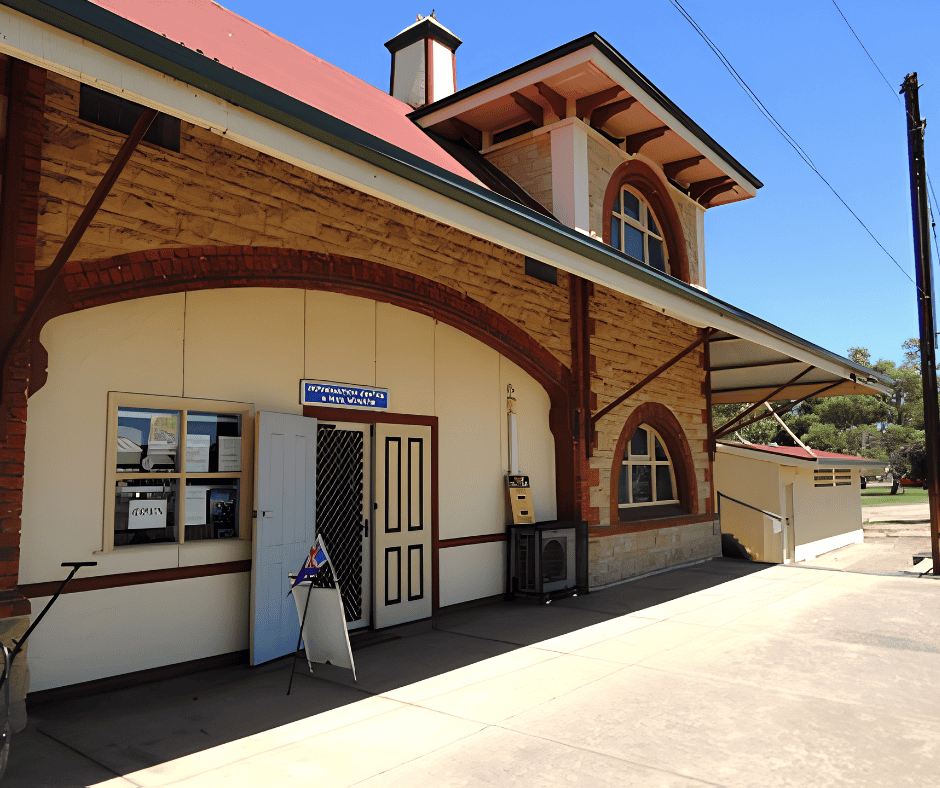
The grand old railway station is the standout building. Inside, the free Tailem Info Station and
Rail Museum preserves photographs, railway equipment, local memorabilia and the town’s
original working signal box. The volunteers—affectionately known as “fettlers”—can provide
a guided look through the collection when available.
We also picked up information about the Tailem Bend Historic Rail Trail, a marked route
that can be walked, cycled or driven. Its interpretive signs identify railway cottages, former
railway facilities and other surviving pieces of the old town. It is a simple, inexpensive way to
understand why Tailem Bend developed where it did.
No visit to Railway Terrace would be complete without stopping at the Tailem Bend Bakery.
The award-winning bakery remains one of the town’s best-known businesses, serving bread,
cakes, pastries and the sort of substantial country-town pies that require both hands and a
sensible shirt.
For caravan supplies, Tailem Bend Foodland on Railway Terrace is open seven days and
carries the groceries and everyday essentials needed to restock the van. The town also has
fuel and takeaway options, so there is no need to arrive with the fridge packed as though
you are crossing the Simpson Desert.
Australia’s Biggest Pioneer Village
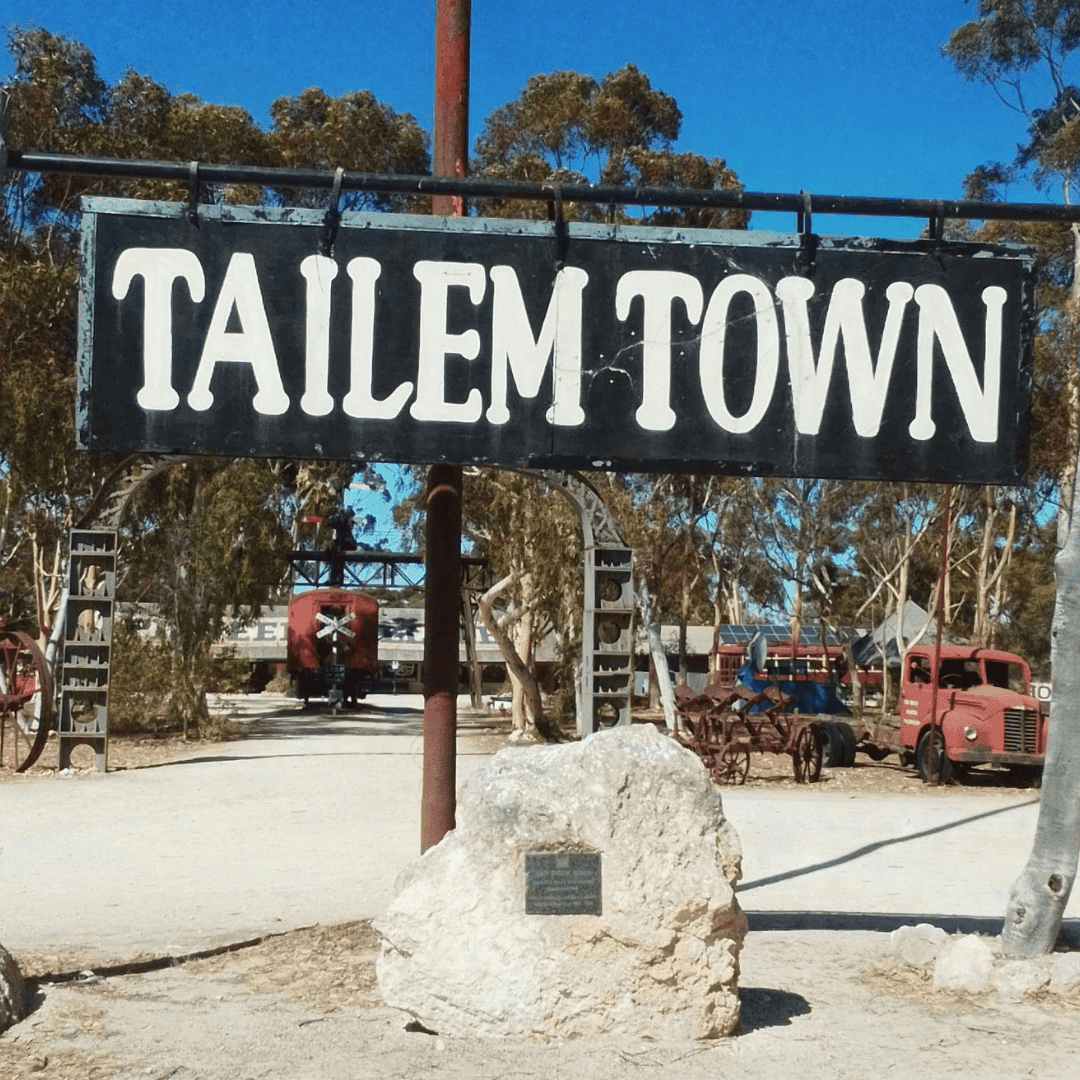
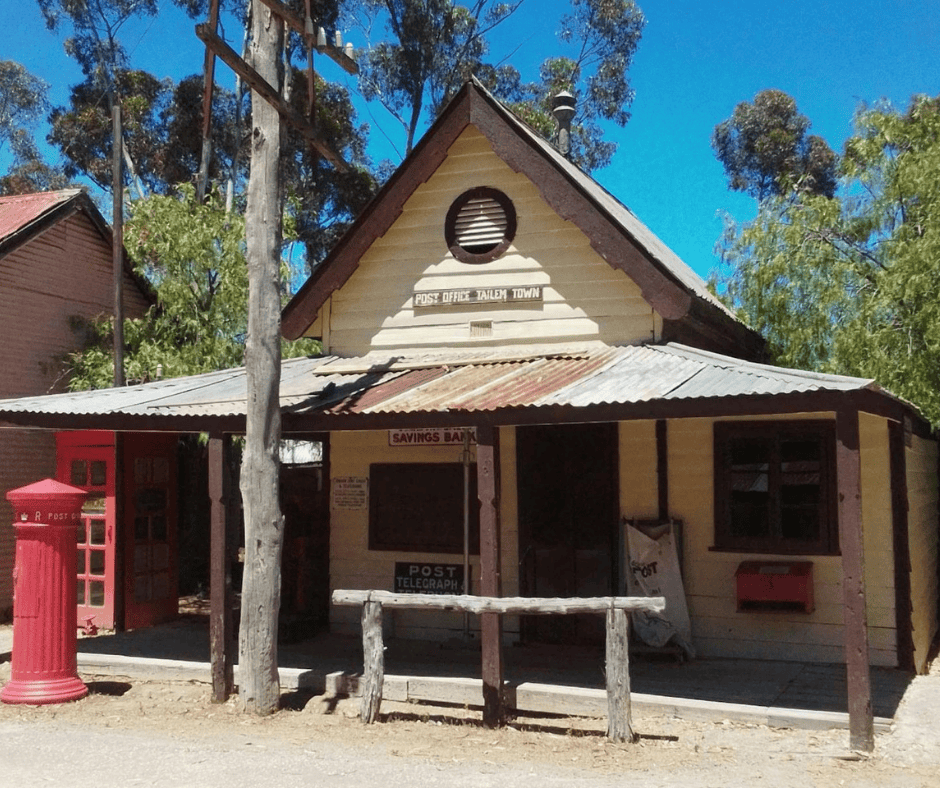
A few kilometres outside town, Old Tailem Town is the attraction that surprised us most.
Established by Peter Squires in 1987 and still operated by his family, the pioneer village
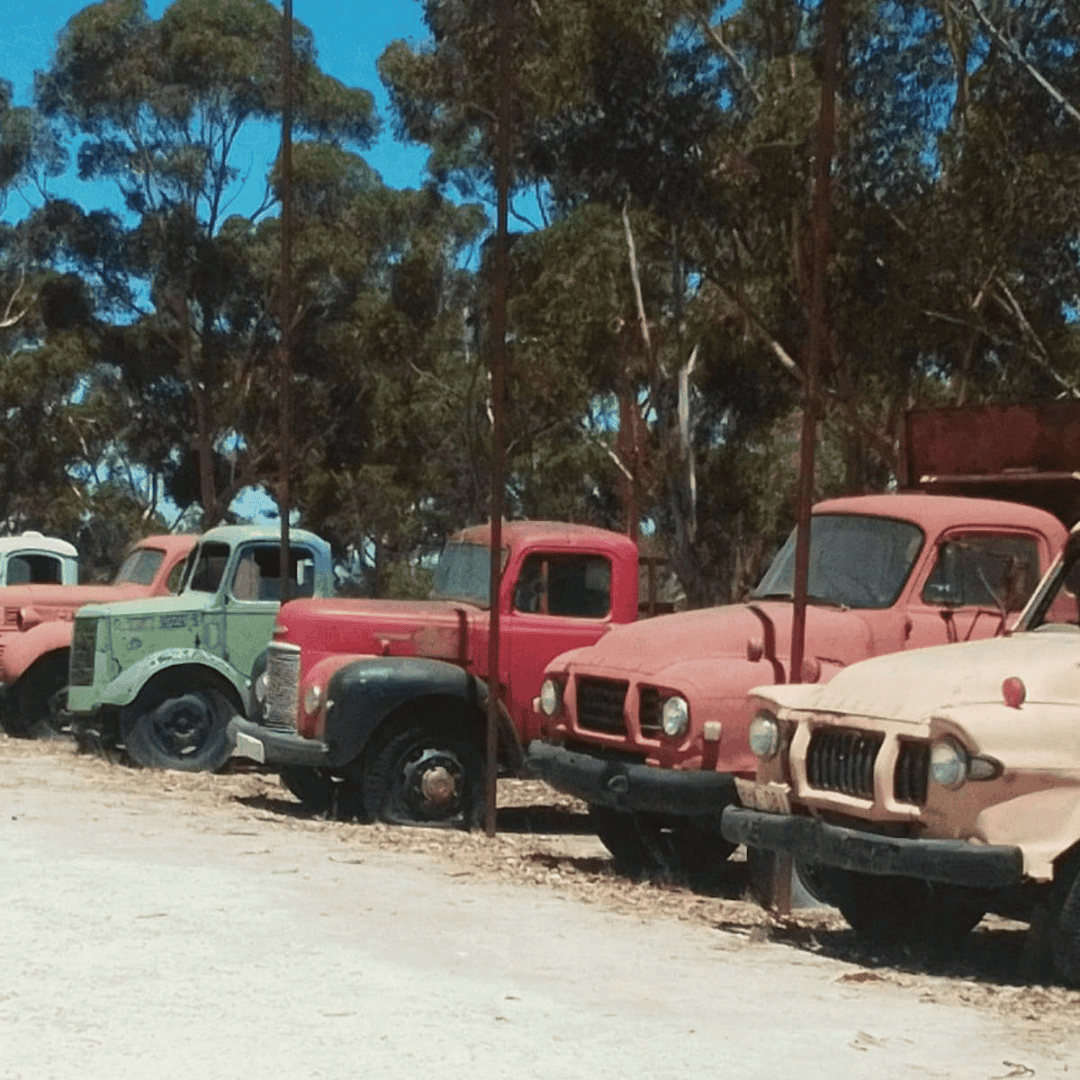
contains more than 100 historic buildings arranged across numerous streets. There are old
shops, cottages, churches, schoolrooms, workshops, a hospital, police station, hotel,
machinery, vehicles and collections covering everyday Australian life from the pioneering
years into the twentieth century.
This is not a quick museum where you look at three display cases and escape through the
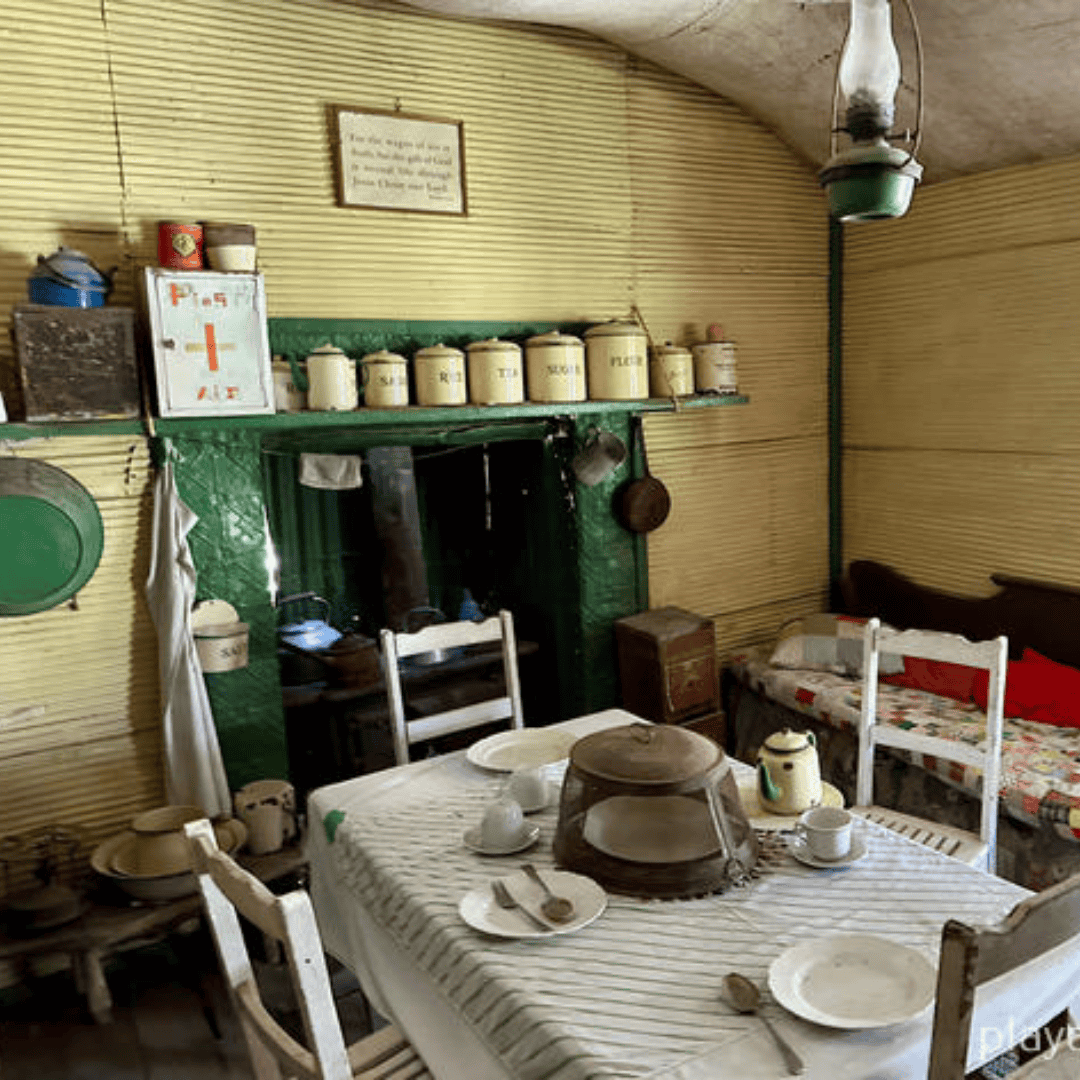
gift shop. Old Tailem Town is sprawling, slightly eccentric and packed with detail. We
wandered through buildings that felt as though their occupants had simply put down their
tools and disappeared for smoko.
Families can turn the visit into a historical treasure hunt, while Grey Nomads may recognise
household items their parents or grandparents once used. Young adventurers armed with a
camera could happily lose several hours among the old signs, weathered buildings and
vintage machinery.
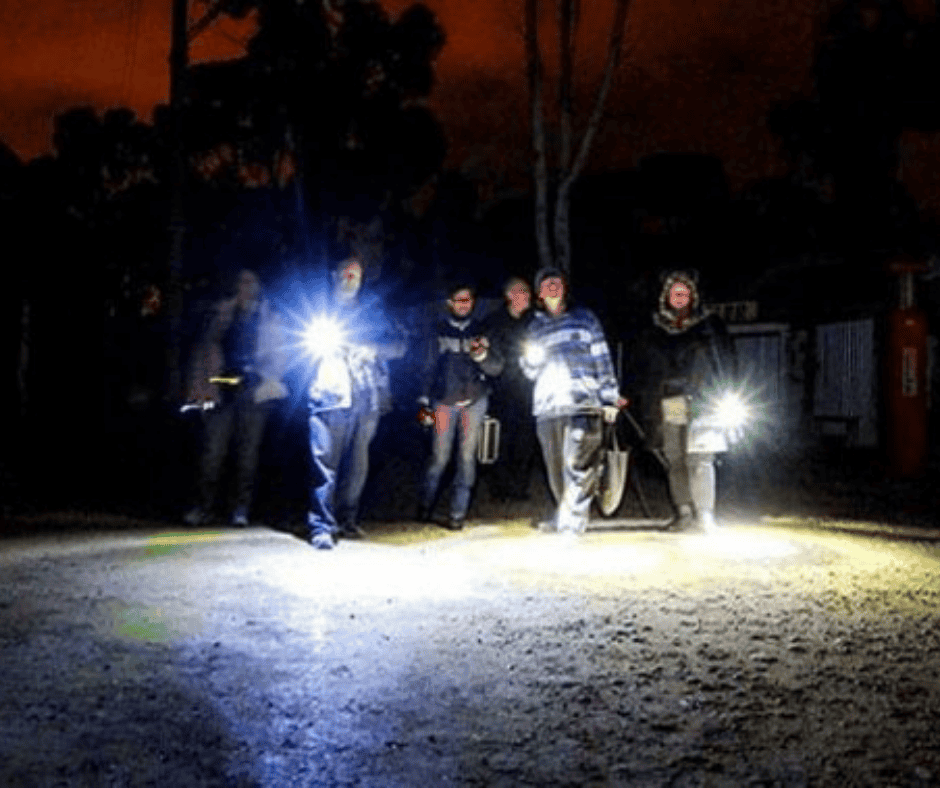
For something completely different, Adelaide’s Haunted Horizons continues to operate
evening ghost tours and paranormal investigations at Old Tailem Town. We joined one of its
conducted experiences after dark, when those innocent-looking buildings became
considerably less friendly. Whether you believe in ghosts or reckon every noise is just a
possum with good timing, walking through an old village at night certainly gets the
imagination going.
The ghost experiences are for adults and must be booked in advance.
A World-Class Playground for Petrol Heads
Tailem Bend’s modern identity changed dramatically with the development of Shell V-Power
Motorsport Park at The Bend, approximately five minutes from town.
I have to tell you folks, this is what got me really excited about this visit, the wife not so
much, but me – 100%!!
The enormous complex includes an international-standard racing circuit, dragway, karting
circuit and facilities for major motorsport events, driver training and motoring experiences.
Even when a major event is not running, the scale of the place is impressive.
We visited the Welcome Centre, looked over the circuit and tried karting—an activity that
quickly reveals which family member becomes dangerously competitive once handed a
helmet. Apparently “I was only warming up” is the traditional excuse when beaten by your
partner.
Available activities change according to the event calendar, so visitors should check ahead
before arriving. The complex’s APEX Bar x Dining also operates on selected days,
overlooking the motorsport precinct and giving visitors somewhere to enjoy a meal without
needing to own a racing licence.
Major race weekends create a completely different atmosphere around Tailem Bend.
Accommodation fills, the roads become busier and the town comes alive with race teams
and spectators. Travellers who enjoy motorsport should plan around an event; those seeking
silence should check the calendar and choose another weekend.


The Town on Australia’s $50 Note
One of our most memorable side trips took us beyond the usual tourism trail to Raukkan, a
small Ngarrindjeri community near Narrung. Raukkan was the birthplace of David
Unaipon—the author, inventor, preacher and advocate whose portrait appears on Australia’s
$50 note.
The community’s restored 1869 church is also pictured behind him on the note, creating the
unusual opportunity to stand in front of a piece of scenery most Australians have carried
around in their wallet without knowing where it was.
Rather than simply arriving and taking a photograph, we arranged a cultural visit through the
Raukkan Community Council. Guided experiences can include the historic church,
community gallery, new mural artworks, local nursery and stories about Ngarrindjeri culture
and Raukkan’s complicated history as the former Point McLeay Mission.
It is a living Aboriginal community—not a conventional tourist attraction—so visitors should
book ahead, follow local guidance and avoid wandering through private areas.
Holding up a $50 note beside the actual church makes a terrific photograph, but
understanding the story of David Unaipon and the community behind the image is what
makes this experience genuinely worthwhile.
Guided cultural visits should be arranged in advance through the Raukkan Community
Council.


Our Base at Waterfront Holiday Park
We stayed at Waterfront Holiday Park, a member of the Kui Parks network, at 216 Princes
Highway.
The first thing visitors need to know is that Waterfront Holiday Park is now an adult-only
park and does not accept guests under 18. It is therefore particularly suited to Grey
Nomads, couples and adult road-trippers seeking a quieter base. Families travelling with
children will need to choose another local accommodation option, although they can still
enjoy all the family attractions around Tailem Bend.
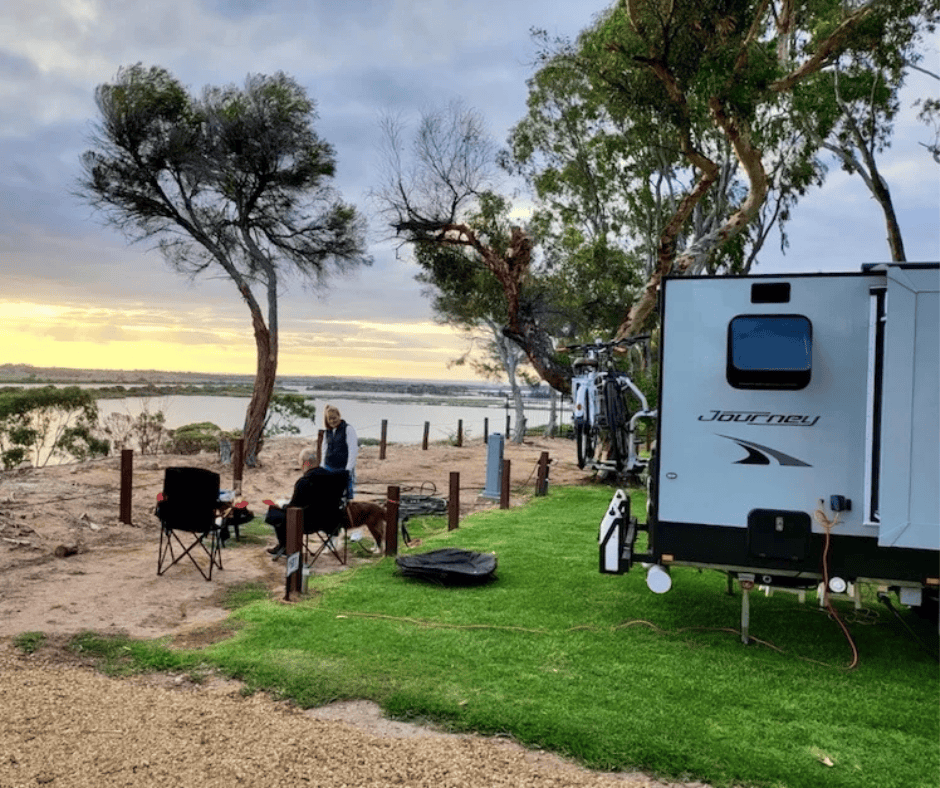
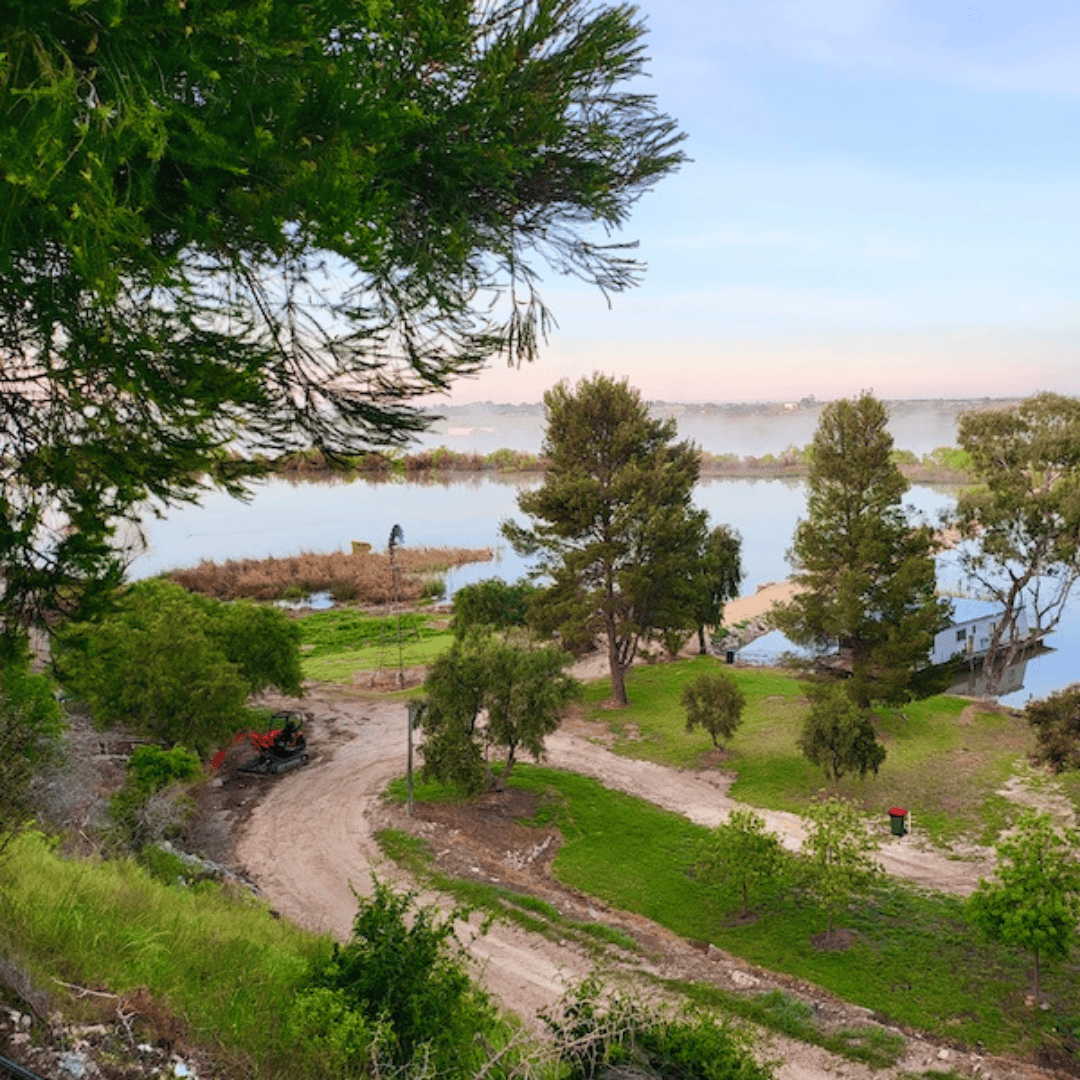
The park occupies an elevated position overlooking its private Murray River frontage. Its
large powered sites include grassy back-in sites, oversized drive-through sites, clifftop
scenic sites and ensuite sites. The wide internal roads and generous site dimensions make it
especially attractive to travellers with large caravans, motorhomes and big tow vehicles. On
some drive-through sites, guests may be able to remain hitched for a short stay.
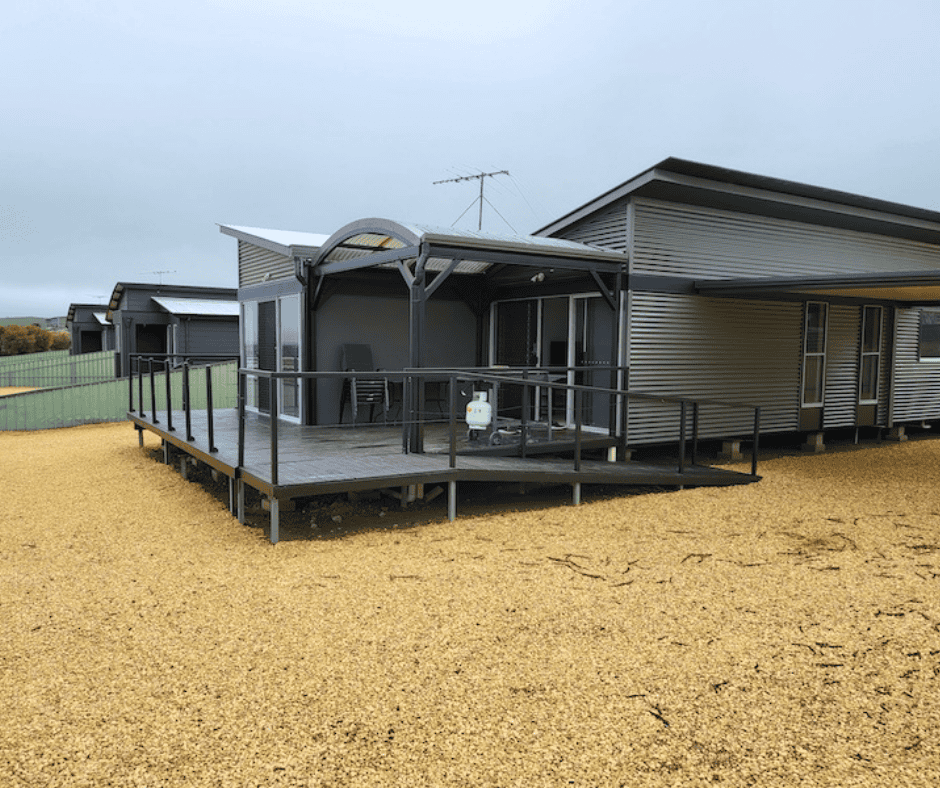
There are no unpowered sites. Travellers without a caravan can choose from compact studio
rooms, two-bedroom cabins and large villas. The built accommodation includes cooking
facilities, private bathrooms and sweeping views across the river.
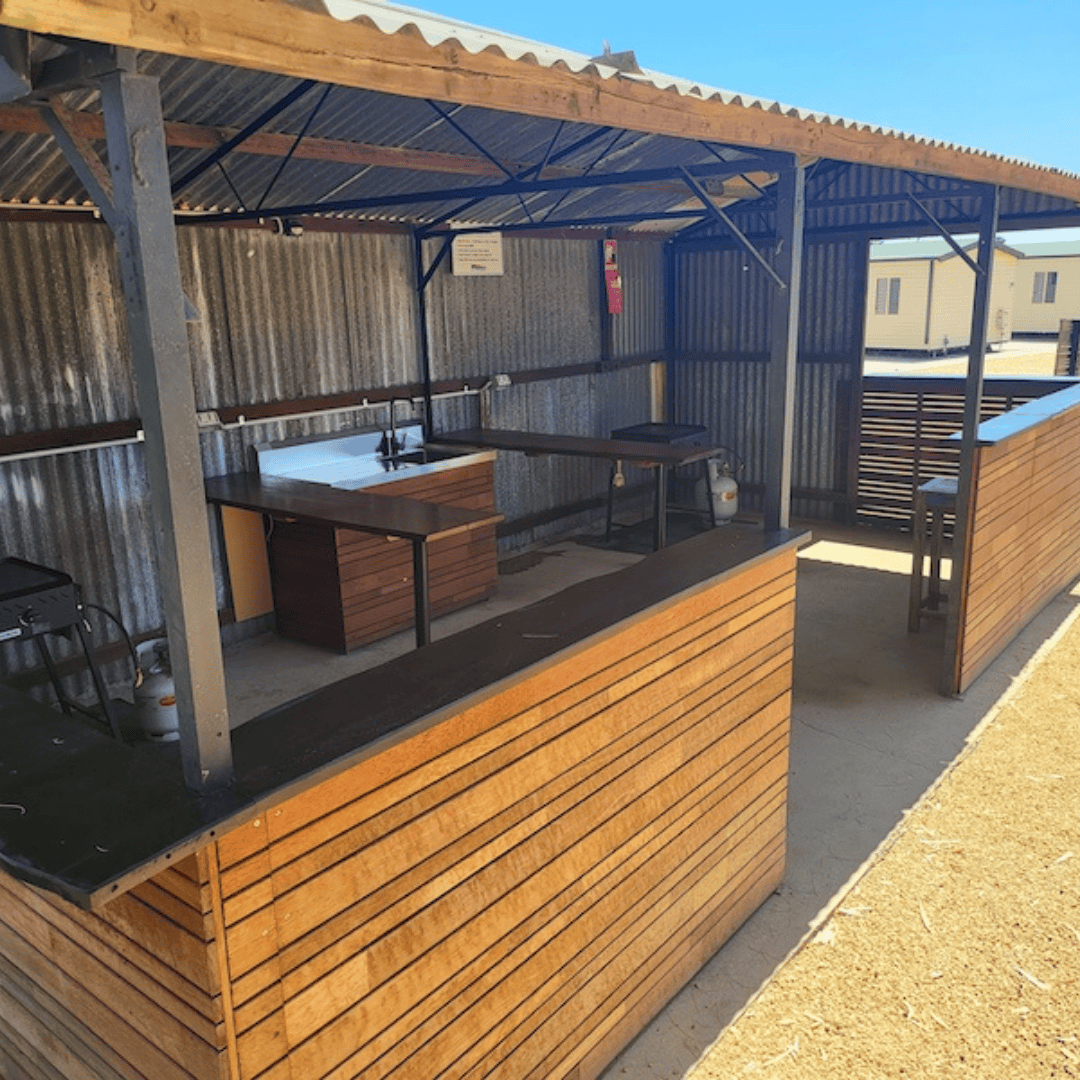
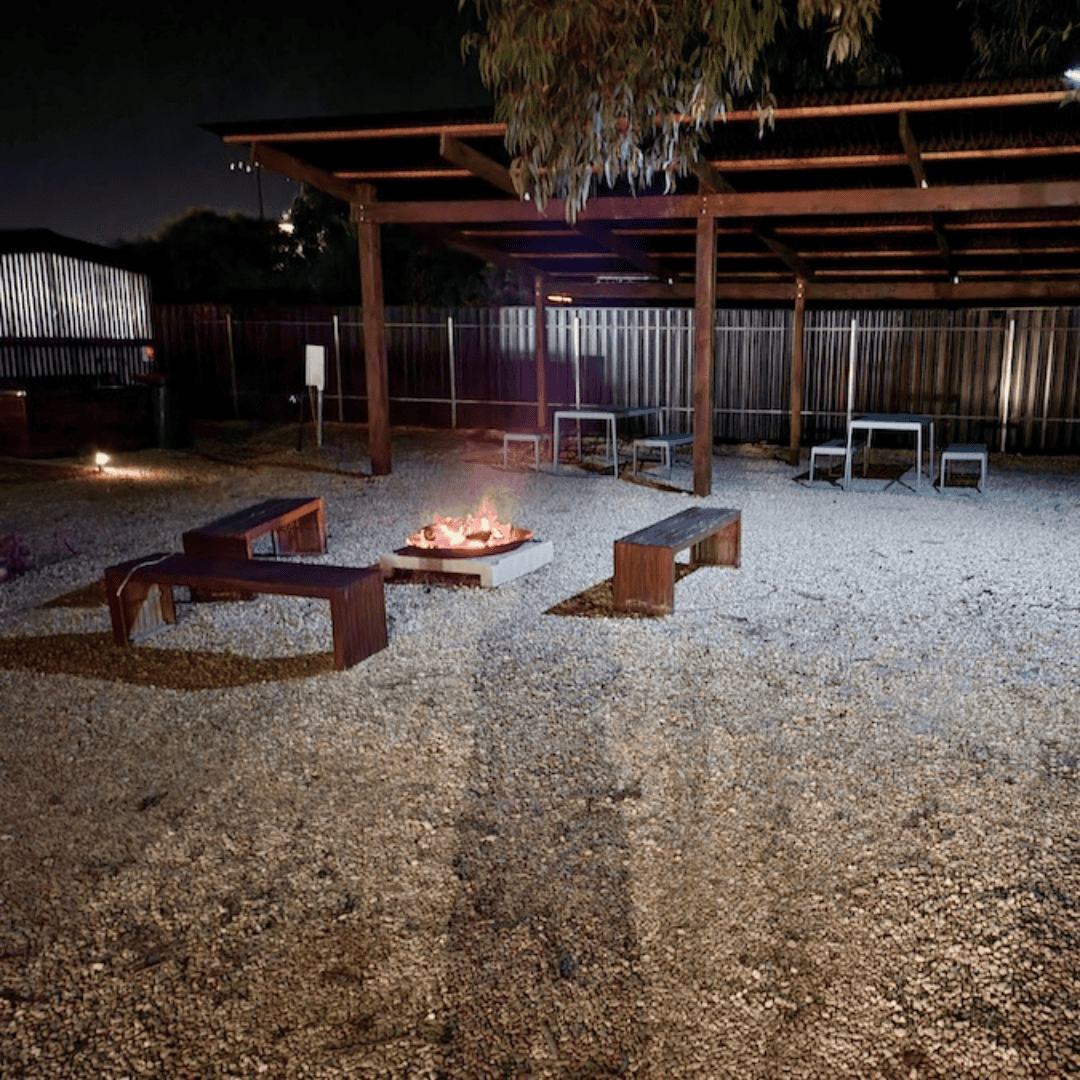
Park facilities include modern amenities, a camp kitchen, barbecue and communal areas,
laundry, dump point, EV charging and secure access through electric gates. Filtered river
water is supplied throughout the park, and caravan sites are pet-friendly, subject to the
park’s conditions. Campfires may be permitted when weather, seasonal restrictions and park
rules allow.
There is no swimming pool, games room or children’s playground. That is deliberate: the
park has been developed as a peaceful adult retreat rather than a family resort.
Its standout features are the enormous sites, green grass, security, river access and
elevated sunset views.
We particularly enjoyed sitting near the clifftop viewing area in the late afternoon as the light
changed over the Murray. The river is down a slope from the main campground, so the walk
back up provides enough exercise to justify another bakery visit.
Who Will Enjoy Tailem Bend?
Grey Nomads will appreciate the railway history, easy highway access, large caravan sites,
river views and the ability to explore several regions without dragging the van through
Adelaide traffic.
Families come for Old Tailem Town, the rail museum, karting, motorsport events and the
town’s position between the Murray River and Coorong. However, families should remember
that Waterfront Holiday Park itself is adult-only.
Young adventurers are most likely to be drawn by karting, motorsport experiences,
photography, cycling the historic trail and joining an after-dark ghost tour. Tailem Bend also
works well as a launching point for a self-drive journey through the Coorong or Murray
Mallee.
When To Visit
Our pick would be autumn, particularly March to May, or spring from September to
November. These seasons generally provide comfortable daytime temperatures for walking
through Old Tailem Town, exploring the railway trail and sitting outside beside the river.
Summer brings long daylight hours and spectacular evenings, but January can be hot. Plan
outdoor activities for the morning, carry water and do not underestimate the sun merely
because there happens to be a breeze.
Winter is cooler and can be wetter, but it also brings quieter roads, fewer crowds and ideal
weather for museums, bakeries and slow drives. A powered site, a warm caravan and a
riverside sunset still make a pretty good winter combination.
Motorsport fans should plan their visit around The Bend’s event calendar. Everyone else
may prefer to avoid major racing weekends if their definition of relaxation does not include
engines capable of waking three postcodes.
Why Tailem Bend Is Worth the Stop
Tailem Bend is not trying to be another manicured riverside resort town. Its appeal comes
from the mixture of old and new: Ngarrindjeri Country, railway heritage, a slightly spooky
pioneer village, a modern motorsport complex and the ever-present Murray River.
It is practical, accessible and easy to explore, but it also rewards travellers prepared to slow
down and look beyond the highway.
Tailem Bend should be treated as a destination in its own right—it literally has something for
everyone.
To find out more about Tailem Bend in South Australia – HERE
To book your stay at Kui Parks Blacksmiths Beachside Holiday Park – HERE
To see find a Kui Parks Holiday Park that suits your next holiday – HERE